


Twin Cities hail history: which storms affected your Minneapolis neighborhood?
The Twin Cities have seen multiple significant hail events from 2020 through 2026. Major storms hit in May 2020 (south metro), August 2022 (west metro), July 2023 (north metro), August 2024 (full metro), May 2025 (southwest metro), April 2026 (west metro), June 10, 2026 (Chisago Lakes area), and June 19, 2026 (2"+ hail, Roseville through northern St. Paul). Most Minnesota homeowners policies allow 1 year from event to file a claim. Modern Exterior Systems (Modex) tracks these patterns to support residents researching past storm damage.
Updated July 2026 · Reviewed by Joe Dvorak, Owner, Modern Exterior Systems
What this page covers
Six years of Twin Cities hail, by date and zone
The Twin Cities sit in a high-hail-risk corridor. The 2020 to 2026 catalog below lists the major events Modex has tracked across the metro — date, affected zones, max hailstone size, and current claim-window status. This is a curated summary, not an exhaustive list — pair it with the NOAA Storm Events Database for full event records.
Event catalog
Major Twin Cities hail events 2020 to 2026
Eight events by date, affected zone, max hailstone size, and current claim-window status. Curated, not exhaustive — for the complete record, check the NOAA Storm Events Database.
Outside the metro? See our St. Cloud, Rochester, and Mankato area hail histories.
Date
June 19, 2026
Max hailstone size: 2.0"+
Affected zones
I-94 to I-694 loop — Roseville, Falcon Heights, northern St. Paul, Woodbury
Supercell tracked from Hanover southeast through the metro. NWS measured 2"+ stones in northern St. Paul; hail fell 10+ minutes in places and covered the ground. A second wind round downed trees near Elk River.
Claim window
Open through June 2027
Date
June 10, 2026
Max hailstone size: 1.75"
Affected zones
North metro fringe — Chisago City, Lindstrom, Wyoming
Overnight storms across the Chisago Lakes area. NWS preliminary reports: 1.25" at Chisago City (Hwy 8 & Olinda Trail), 1.75" near Wyoming, property damage in Lindstrom.
Claim window
Open through June 2027
Date
April 27, 2026
Max hailstone size: 1.25"
Affected zones
West metro — Hopkins, St. Louis Park, Edina
Early-season event. Narrow footprint, intense in target zones.
Claim window
Open through April 2027
Date
May 17, 2025
Max hailstone size: 1.5"
Affected zones
Southwest metro — Eden Prairie, Chanhassen
Smaller geographic footprint, intense within zones. Documentation still valuable.
Claim window
Standard window closed late May 2026
Date
August 5, 2024
Max hailstone size: 2.25"
Affected zones
Full metro — Minneapolis, St. Paul, suburbs
Largest event of the period. Widespread roof and siding claims.
Claim window
Standard window closed August 2025
Date
July 14, 2023
Max hailstone size: 1.5"
Affected zones
North metro — Maple Grove, Brooklyn Park
Mid-summer event with a large geographic footprint across the north metro.
Claim window
Standard window closed July 2024
Date
August 11, 2022
Max hailstone size: 2.0"
Affected zones
West metro — Wayzata, Minnetonka, Plymouth
Significant damage along the Lake Minnetonka corridor and west-metro lake homes.
Claim window
Standard window closed August 2023
Date
May 24, 2020
Max hailstone size: 1.75"
Affected zones
South metro — Burnsville, Lakeville, Apple Valley
Widespread roof claims across the south-metro corridor.
Claim window
Standard window closed May 2021
Standard Minnesota homeowners policies allow 1 year from event to file. Some carriers consider supplemental filings on previously-reported losses past the window — talk to your agent.
Damage
What does hail damage actually look like?
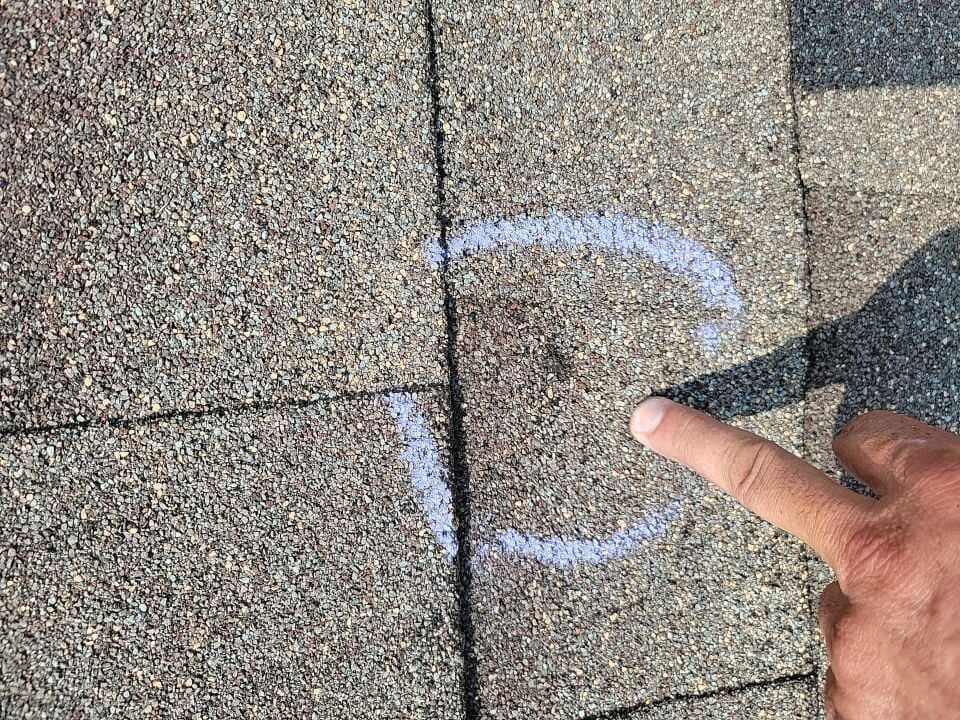
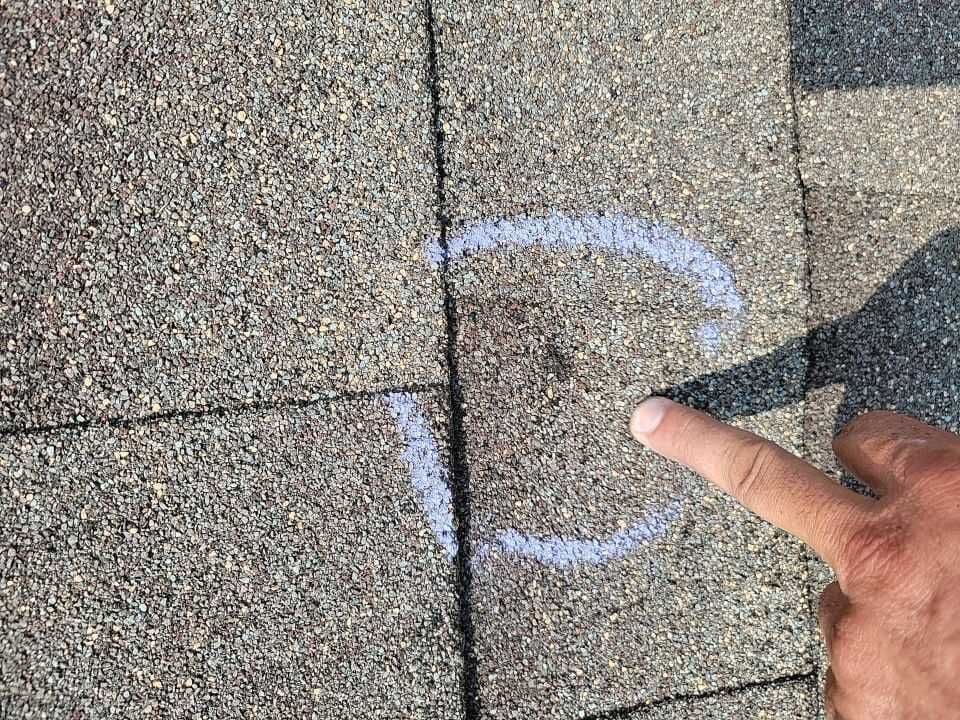
Most hail damage isn't visible from the ground. Bruises show up as soft circular indentations on the shingle mat. Granule loss exposes the asphalt underneath and accelerates weathering. Insurance adjusters look for these specific patterns when they decide whether a claim qualifies.
Cracked fiberglass in the shingle base
Granule loss exposing the underlying asphalt
Dented gutters, downspouts, and soffit vents
AC condenser fin damage on the ground unit

Detection
How to tell if your roof was hit
Most hail damage isn't visible from the ground. Three ways to check whether your Twin Cities home took impact from one of the events in the catalog above:

Look up your address in the NOAA Storm Events Database (free at ncdc.noaa.gov/stormevents/) filtered by county and date range.

Check your insurance carrier's claim history — your agent can confirm whether the address fell under a declared storm zone.

Schedule a free Modex inspection. We walk roof, siding, windows, and gutters and document with photos.
Timeline
Which claim windows are still open as of July 2026?
Most Minnesota homeowners policies allow 1 year from event to file a claim. Three of the eight storms in the 2020–2026 catalog are still inside their standard window — including both June 2026 events.
June 19, 2026 event (Roseville–St. Paul corridor) — open through June 2027
June 10, 2026 event (Chisago Lakes area) — open through June 2027
April 2026 event — open through April 2027
May 2025 and August 2024 events — standard windows closed; supplemental filings possible per carrier
2020, 2022, 2023 events — standard windows closed; talk to your agent before assuming the door is shut
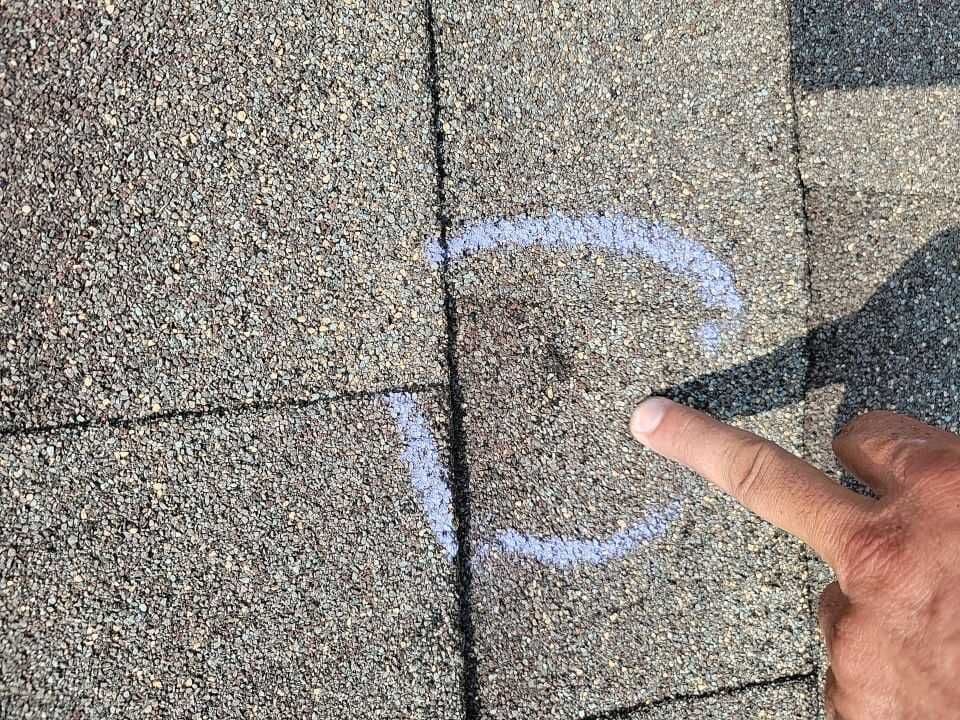
Why this matters
Why hail history matters for your Twin Cities roof
Three reasons to know which storms hit your zip code, even if the damage isn't visible from the ground.
Claim windows are still open
Most Minnesota homeowners policies allow 1 year from event to file. The April 2026 window is open through April 2027. The May 2025 window closes in late May 2026. If your roof took impact and wasn't inspected, the door may still be open.
Older damage compounds
Hail damage from a 2020 storm that wasn't repaired is now compounded by five-plus years of weathering, freeze-thaw cycles, and smaller storms. The damage profile gets harder to attribute to a specific event over time — which makes the carrier's review harder, not easier.
Insurance policies have tightened
Twin Cities carriers raised deductibles, lowered RCV depreciation schedules, and tightened claim review starting in 2023. A claim filed today on a 2024 storm faces different scrutiny than one filed within 60 days of the event.
The questions Twin Cities homeowners ask about hail history
Year-by-year coverage, address lookup, claim windows, neighborhood-level patterns, and whether we chase storms — the five we hear most often.
Free hail inspection on your Twin Cities home
We'll walk the roof, photograph any hail bruising, document damage on every elevation, and email a written assessment within 48 hours. No pressure, no same-day close. Works whether the claim window is open, closing, or already closed — the documentation is valuable either way.

Modex documents Twin Cities hail events annually to help homeowners understand which storms hit their zip code and whether claim windows are still open. Curated summary sourced from NOAA Storm Events Database and Modex inspection history. Modex is a women-owned roofing contractor in Eden Prairie, MN. CertainTeed ShingleMaster · Malarkey Emerald Pro Pro · Atlas Pro+. BBB A+ · MN License #BC762305.