

Joe Dvorak | Modern Exterior Systems (Modex) • Updated: July 2026
"Composite roofing" is one of those terms that gets thrown around loosely, so let me clear it up first, because it means different things to different salespeople. I install the premium end of it — DaVinci synthetic slate, CeDUR synthetic shake — on Twin Cities homes where a homeowner wants the look of slate or cedar without the headaches. Here's what composite roofing actually is, what it does well, where it falls short, and when it's worth the money in Minnesota.
What "composite roofing" actually means
Composite roofing is a catch-all for roofing made from engineered/polymer materials molded to mimic a natural product — usually slate or cedar shake. The good ones are virgin-resin polymers with UV inhibitors and impact modifiers, molded from real slate and shake so they carry authentic texture. Brands like DaVinci and CeDUR live here.
One thing to watch: some people also call a standard architectural asphalt shingle a "composite shingle," because it's a composite of asphalt, fiberglass, and granules. Same word, very different product and price. When I say composite roofing, I mean the synthetic slate/shake tier — a lifetime-class roof, not a mid-range asphalt.
What composite roofing does well
It lasts. A quality synthetic slate or shake is built for 50 years or more and usually carries a 50-year limited lifetime warranty — roughly double a good architectural asphalt roof's real-world life.
It survives Minnesota hail. Most premium composites carry a Class 4 impact rating, the top tier. That matters here — a Class 4 roof often qualifies for a 10–30% homeowner's insurance premium discount in Minnesota, and it shrugs off the hail that dents and bruises softer roofs.
It's light. Composite runs about 2–3 lbs per square foot — the same structural load as asphalt. Natural slate is 8–10 lbs and usually needs thousands in structural reinforcement before it can even go on. Composite gets you the slate look without rebuilding the roof structure.
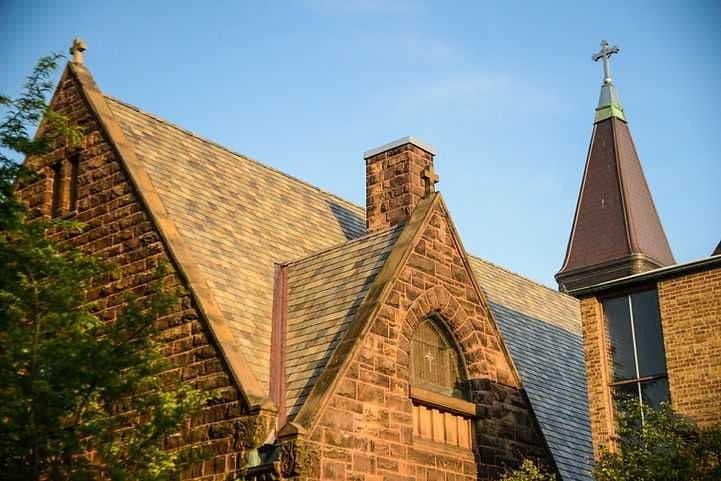
It looks the part. Because they're molded from real slate and shake, the good ones read as authentic from the street — which is why they pass HOA and historic-district review in places like Edina's Country Club neighborhood.
Low maintenance. No sealing, no staining, no rot, no insects — unlike real cedar, which is a maintenance commitment.
The honest downsides
Cost. This is the big one. A composite slate or shake roof runs $50,000 to $95,000+ on a typical Twin Cities home — two to three times an asphalt roof. It's a premium product at a premium price, and it only pays off if you're staying in the home long enough (or value the look and durability enough) to justify it.
Not every "composite" is equal. The tier ranges from excellent to junk. Cheaper composites can fade, get brittle, or fail early. The material category is only as good as the specific product — and the warranty behind it.
Fewer installers do it right. Composite slate and shake have specific fastening, spacing, and layout requirements. A crew that installs it like asphalt will cause problems. There are far fewer contractors who do it properly than there are asphalt installers.
Longer lead times. Standard colors run a few weeks; custom blends can run 8–16 weeks. It's not a next-week roof.
Composite vs asphalt shingles
Straight comparison for a Twin Cities home:
| Composite (synthetic slate/shake) | Architectural asphalt | |
|---|---|---|
| Real-world lifespan | 50+ years | 25–30 years |
| Impact rating | Usually Class 4 | Varies (Class 3–4) |
| Insurance discount | Often 10–30% (Class 4) | Only if Class 4 |
| Weight | 2–3 lbs/sq ft | 2–3 lbs/sq ft |
| Look | Authentic slate/shake | Dimensional asphalt |
| Cost (typical home) | $50K–$95K+ | $14K–$28K |
| Maintenance | Minimal | Minimal |
Asphalt is the right answer for most homes on a normal budget. Composite is for the homeowner who wants a lifetime roof and the slate-or-cedar look, and plans to be there long enough to enjoy it.
When composite makes sense in Minnesota
It makes sense if you're staying put, you want the roof to be the last one you ever buy, you love the slate or cedar aesthetic, or you're in a neighborhood where the look matters for approval or resale. The Class 4 insurance discount takes some of the sting out of the price over time, and in a hail-prone metro that's a real number.
It doesn't make sense if you're on a tight budget, or you may sell in a few years — you won't recoup the premium that fast. In that case a good Class 4 architectural asphalt gives you strong hail protection at a fraction of the cost.
Joe's Note: If you're drawn to composite, get specific about the exact product and read the warranty, not just the brochure. "Composite" tells you almost nothing — DaVinci Bellaforté and a bargain-bin synthetic are both "composite," and they are not the same roof.
FAQ
What is composite roofing?
Composite roofing is engineered polymer roofing molded to mimic natural slate or cedar shake — brands like DaVinci and CeDUR. It delivers the high-end look with far less weight and maintenance than the real thing. (Confusingly, standard asphalt shingles are also sometimes called "composite" shingles.)
How long does composite roofing last?
Premium synthetic slate and shake are built for 50 years or more and usually carry a 50-year limited lifetime warranty — roughly double the real-world life of a good architectural asphalt roof.
Is composite roofing worth the cost?
It runs $50K–$95K+ on a typical home, so it's worth it if you're staying long-term, want a lifetime roof and the slate/cedar look, or value the Class 4 hail protection and insurance discount. For a tight budget or a short stay, Class 4 asphalt makes more sense.
Composite vs asphalt shingles — what's the difference?
Premium composite (synthetic slate/shake) lasts 50+ years, looks like natural slate or cedar, and costs 2–3× more. Architectural asphalt lasts 25–30 years at a fraction of the price. Both weigh about the same and both can be low-maintenance; the gap is lifespan, looks, and cost.
Does composite roofing qualify for an insurance discount in Minnesota?
Most premium composites carry a Class 4 impact rating, which often qualifies for a 10–30% homeowner's premium discount in Minnesota. Confirm the specific product's rating and check with your carrier.
Is all composite roofing the same quality?
No. The category ranges from excellent to poor. Fading, brittleness, and early failure show up in the cheaper products. Judge the specific product and its warranty, not the "composite" label.
Curious whether a composite roof pencils out for your home? Call Modern Exterior Systems at 952-206-6339 — I'll show you the real numbers against a quality asphalt roof and tell you honestly which one fits. No pressure. Or request your free estimate online.
Modern Exterior Systems is a women-owned, family-operated roofing and exterior contractor based in Eden Prairie, MN, serving Minneapolis, St. Paul, and 90+ Twin Cities communities. Owner Joe Dvorak brings two decades of hands-on construction experience, CertainTeed ShingleMaster and Malarkey Emerald Pro certifications, a BBB A+ rating, and a lifetime workmanship warranty to every residential project.