

Joe Dvorak | Modern Exterior Systems (Modex) • Updated: July 2026
I've been putting crews on Twin Cities roofs for two decades. Somewhere in the last few years, "drone roof inspection" turned into a marketing badge — every contractor slaps it on the website like it's a free upgrade on every job. So let me be straight with you about how we actually use one, because the honest answer is more useful than the sales pitch.
We don't fly a drone on every roof. Most of the time I'd rather have a set of boots up there. But there are specific situations where a drone is the better call — and a couple where it's the only safe call. Here's how I decide.
The short answer
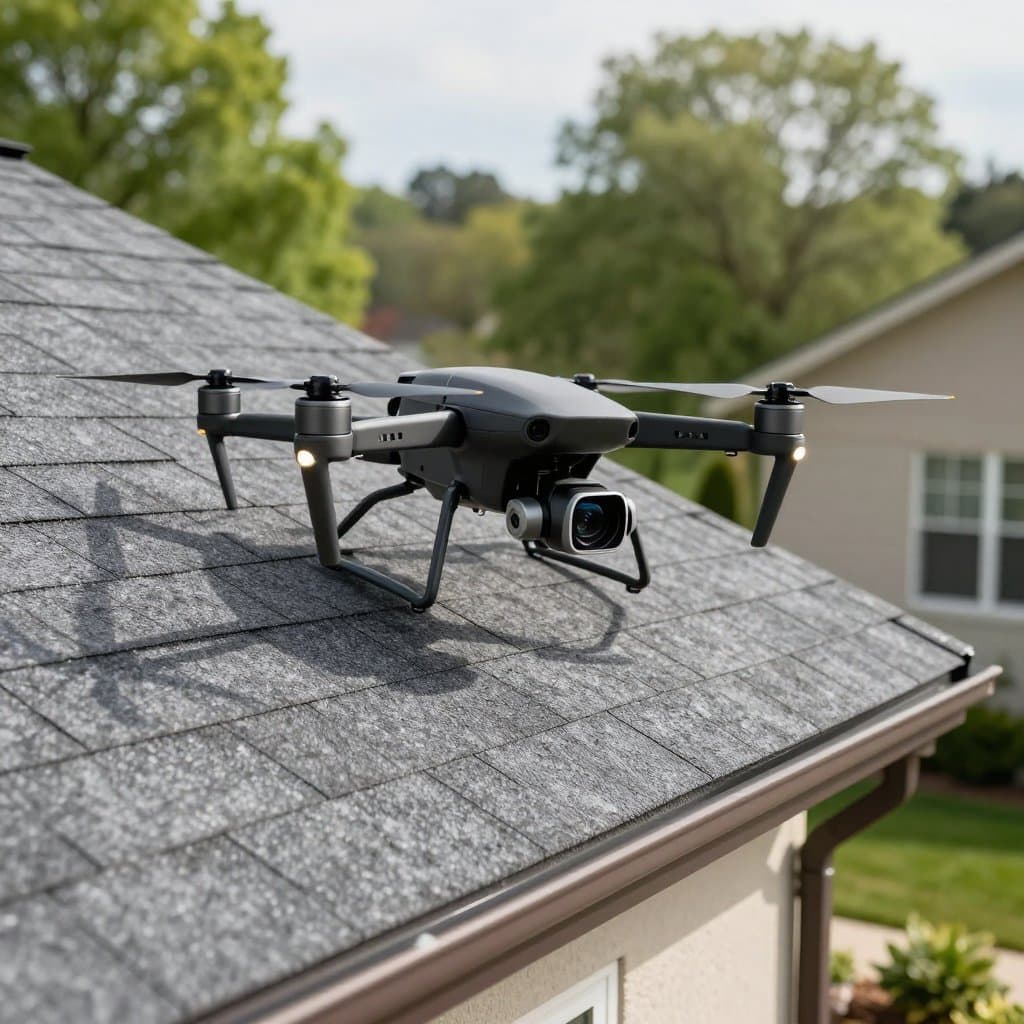
A drone is a tool, not a standard step. On a normal, walkable asphalt roof, I get more from standing on it than from anything a camera sees from 40 feet up. When a roof is too steep, too high, too fragile, or too storm-torn to walk safely, the drone goes up instead. Safety and access decide it — not what looks impressive in a brochure.
When a drone earns its keep
Steep and tall roofs. A lot of the lake homes and older two-and-a-halfs around Minnetonka, Excelsior, and Wayzata have pitches you don't casually stroll across. If a roof is steep enough that walking it is a fall risk, we're not going to pretend otherwise to get a closer look. The drone gets us eyes on every plane without anybody hanging off a ladder they shouldn't be on.
Storm-torn roofs that aren't safe to walk. After a hailstorm rolls through the western suburbs, some roofs are compromised enough that adding a 200-pound guy to the load is a bad idea. A drone documents the overall condition first, so we know what we're dealing with before anyone commits weight to it.
Fragile materials. Old cedar shake, slate, tile, certain synthetic slates — you can crack or displace those just by walking wrong. Sometimes the responsible first pass is a drone, then a careful on-foot check only where it's needed.
The big-picture overview. For documenting a whole roof's condition — every slope, the valleys, the ridgelines — a drone gives you a clean top-down record fast. That's genuinely useful for a storm-damage file or a "should I be worried?" checkup.
When I'd rather just walk it
Here's the part the drone-happy websites skip. On most asphalt shingle roofs — the bread and butter of Twin Cities housing stock, the '80s and '90s builds all over Eden Prairie, Plymouth, and Maple Grove — a camera in the air misses things I can only catch with my hands.
I lift shingles to check the seal strips. I press on decking to feel for soft spots the surface hides. I run granule loss through my fingers. I look at nail pops, flashing seals, the condition of the pipe boots up close. A drone can photograph a bruise from hail; it can't tell me whether the mat underneath cracked, and it can't feel a spongy deck that's been holding moisture. For a roof I can safely stand on, on foot wins. Every time.
What a drone can't do — the honest limits
- It can't lift a shingle to check the seal or the mat underneath.
- It can't feel soft decking or a nail that's backed out under the surface.
- It can't test a seal or a flashing the way a hand can.
- It doesn't replace the report. A photo is documentation, not a diagnosis. Somebody who knows roofs still has to read it.
And one more, because you'll see it advertised: I don't promise thermal or infrared drone scans as some magic damage-detector on every job. In the right lab conditions it can hint at trapped moisture, but on a random Tuesday over a Minnesota roof it throws enough false readings that I won't hang a claim on it. If a situation genuinely calls for it, fine — but I'm not going to sell it as a standard party trick.
Why this matters for a storm claim
If you're filing a hail or wind claim, documentation is leverage. A clear top-down set of images of every slope — especially on a steep or damaged roof we couldn't fully walk — helps show an adjuster the full scope instead of a few ground shots. We pair that with the on-roof detail wherever it's safe to get it. The drone doesn't replace the walk; it fills in the parts of the roof the walk can't safely reach.
One caution I give every homeowner: a drone flyover alone is not a claim. It's a starting picture. The value is in someone who works these roofs reading what the images actually show — and telling you honestly whether a claim makes financial sense against your deductible before you ever file.
The bottom line from a guy who's been up there
A drone is a good tool used in the right spot: steep, tall, fragile, or storm-torn roofs where walking is unsafe or impossible. On a normal walkable roof, boots and hands still beat a camera. Any contractor telling you a drone is always better is selling the tool, not inspecting your roof. We use one when it's the safest or best way to see what's going on up there — and we tell you which method we used and why.
FAQ
Do you use a drone on every roof inspection?
No. We walk the roof when it's safe, because up close I catch things a camera can't — seal condition, soft decking, granule loss in hand. We send a drone up when a roof is too steep, too tall, too fragile, or too storm-damaged to walk safely.
Is a drone inspection as good as walking the roof?
For most walkable asphalt roofs, no — on-foot gives more detail. For steep, high, or unsafe roofs, a drone is better because it gets eyes on every slope without a fall risk. They're best used together: the drone for reach and overview, the walk for hands-on detail.
Can a drone detect hail damage?
It can photograph and document damage well, especially across a whole roof at once. What it can't do is lift a shingle to check whether the mat cracked underneath, so a drone pass is usually paired with a closer look where the roof allows it.
Do you offer thermal or infrared drone scans?
Only when a specific situation genuinely calls for it. We don't promise infrared moisture detection as a standard step — over a typical Minnesota roof it produces too many false readings to base a decision on.
Is a drone roof inspection safer?
Yes, when a roof is steep, tall, or storm-compromised. Keeping a person off an unsafe roof and sending a camera instead is exactly the situation a drone is built for.
How much does a roof inspection cost?
Our storm and hail inspections are free — whether we walk the roof, fly it, or both. If we find damage, we'll tell you whether a claim makes financial sense against your deductible before you file.
Ready for a straight answer on your roof? Call Modern Exterior Systems at 952-206-6339 — we'll come out, use whatever method safely gets the best look at your roof, and give you an honest read. No pressure. Or request your free inspection online.
Modern Exterior Systems is a women-owned, family-operated roofing and exterior contractor based in Eden Prairie, MN, serving Minneapolis, St. Paul, and 90+ Twin Cities communities. Owner Joe Dvorak brings two decades of hands-on construction experience, CertainTeed ShingleMaster and Malarkey Emerald Pro certifications, a BBB A+ rating, and a lifetime workmanship warranty to every residential project.