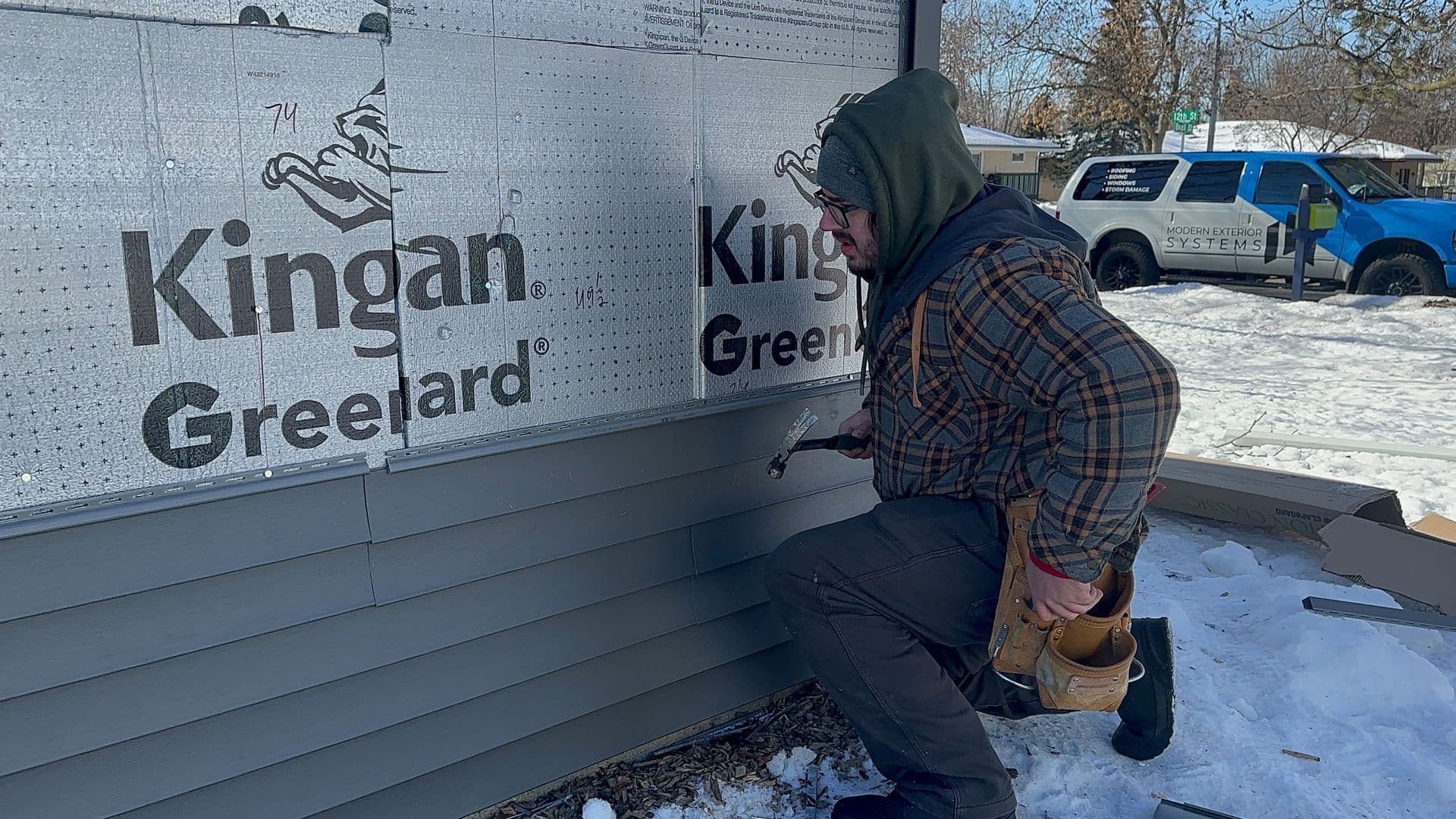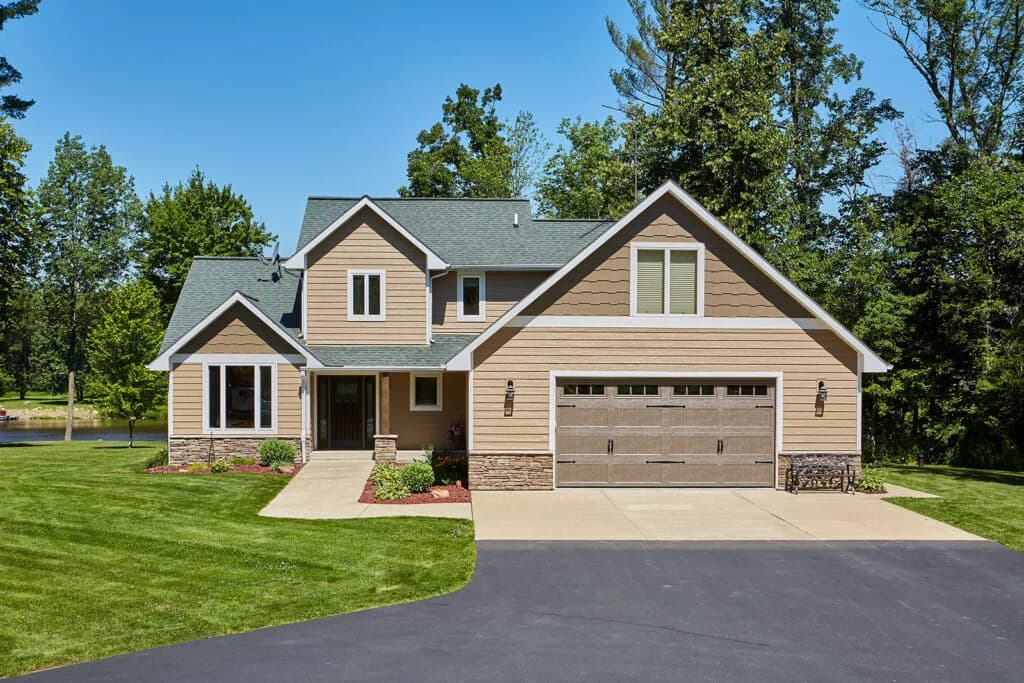


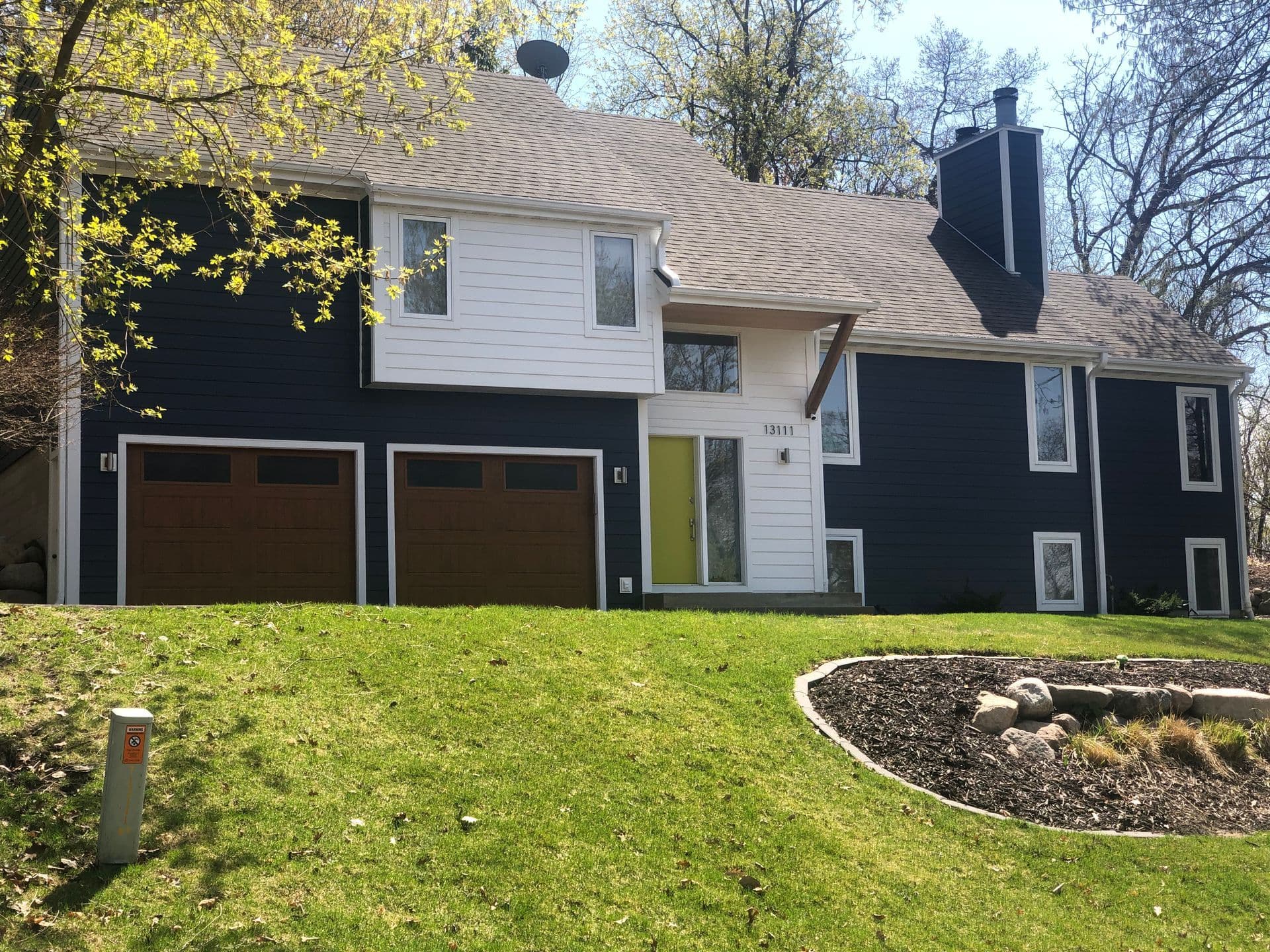
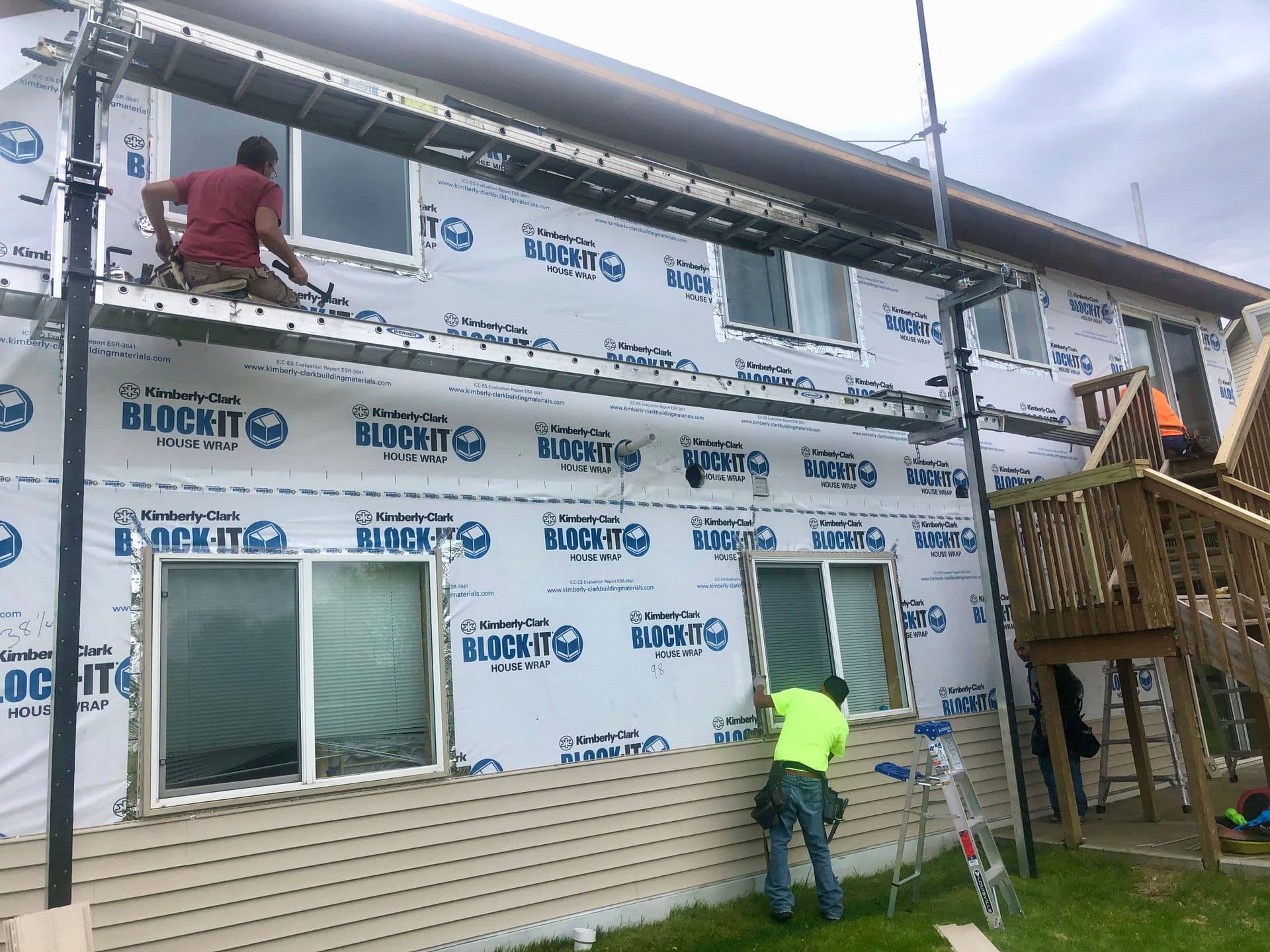
I install vinyl siding. Not as often as LP SmartSide or James Hardie, but when a homeowner walks me through their budget or their property situation and vinyl is the right call, I quote it and I install it well. So when somebody asks me how long it'll last, I owe them a real answer — not the brochure number, and not the "oh, vinyl is garbage" answer you'll get from contractors who only sell premium product.
Here's the honest version after decades of pulling old vinyl off Twin Cities homes and putting new vinyl on them.
The Short Answer
The Vinyl Siding Institute and most manufacturer warranties say 20 to 40 years. Some premium vinyl carries a limited lifetime warranty.
In the Twin Cities, my real-world number is closer to 15 to 20 years before you're looking at replacement — and the cheap stuff from the late '90s and early 2000s is often done sooner than that. Premium insulated vinyl, properly installed on a home that doesn't get hammered with full south-facing UV or routine hail, can stretch into the upper end of that range. I've pulled 25-year-old vinyl off homes in Bloomington and Plymouth that was still in usable shape. I've also pulled 12-year-old vinyl off homes in Eden Prairie where one bad winter and one hailstorm finished it.
The gap between the brochure number and what actually happens here isn't a defect. It's climate. We can swing 50 degrees in 24 hours during March. We get -20°F real-feel snaps multiple times a winter. We're a hail target. Vinyl was engineered against an average North American climate. Minnesota is not average.
Why Minnesota Is Hard on Vinyl
Three things age vinyl faster than the brochure expects:
1. Brittleness in extreme cold. Vinyl gets stiff below freezing and noticeably worse below 20°F. At -20°F real feel, a small impact that wouldn't faze it in July will crack it — a wind-blown branch, a snow shovel handle, a snowblower throwing ice, hail mixed with sleet. I get February calls every year where a homeowner says 8 panels popped off the front of their house after a windstorm. That's the cold-brittle failure mode.
2. Freeze-thaw cycling. A 12-foot vinyl panel can grow as much as 5/8 of an inch from the coldest morning to the hottest afternoon. We run that cycle constantly from November through March. Every cycle stresses the fasteners and channels. Over 15 winters, panels walk out of their locks and corner posts develop gaps.
3. UV degradation on south and west walls. North-facing walls might look brand new at year 20. The south and west sides of the same house can be faded, chalky, and softer by year 12. Newer formulations with better UV inhibitors hold up longer, but the sun still wins eventually.
That's the honest physics. None of it makes vinyl a bad product. It just makes it a product with a real lifespan ceiling in our climate.
What Shortens Vinyl Siding's Life (Beyond Climate)
Things that drop your number toward the low end of the range:
- Hail strikes. Direct hits from 1-inch or larger hail crack vinyl in cold weather and dent or split it even when warm. The 2017, 2019, 2023, and 2024 metro hail events all generated vinyl-siding claims.
- Builder-grade product. A lot of late '90s and early 2000s vinyl was the cheapest 0.040" panel the builder could get. Thin profiles flex more, fade faster, crack easier.
- Bad installation. Vinyl has to be hung loose with expansion room at every channel. Low-bid crews routinely nail it tight, and that stress goes straight into the panel — which then cracks early.
- No house wrap or bad flashing. Vinyl is a rainscreen, not a watertight envelope. Bad wrap or wrong window flashings show up as rotted sheathing at year 14 behind functional-looking vinyl.
- South-facing dark colors. Deep navy or charcoal on the south side of a Wayzata lake home fades on a shorter timeline than the same color on the east side of a Hopkins rambler.
What Extends It
Things that push your number toward the high end:
- Premium insulated vinyl. Foam-backed panels are stiffer, more impact-resistant, less prone to oil-canning, and age better through freeze-thaw than standard 0.040" hollow-back vinyl.
- Light to medium colors. Cream, light gray, sage, light tan. They hide fade and absorb less heat. A light-color south wall can still look acceptable at year 22 when the dark version would be done at year 12.
- Annual cleaning. Garden hose and soft brush once a year. Most homeowners never do this. The ones who do get noticeably longer life out of the product.
- Honest installation. Properly hung vinyl with real expansion room and intact house wrap behind it will outlast bad installs by years. Contractor selection matters more than which brand you bought.
- Tree cover. A shaded lot ages vinyl much slower than an open ridge.
The "8 Squares Popped Off" Repair Reality
This is the part most lifespan articles skip. Vinyl doesn't usually fail all at once. It fails in pieces.
You get a January cold snap with 40 mph winds, and 8 panels peel off the front. Or you get an August hailstorm and 30% of your south wall is cracked. You call around for a repair, and here's what you learn: the color isn't made anymore. The dye lot has shifted. The profile got discontinued. The closest match looks fine on the supplier's website and obviously wrong on your house.
This is the silent killer of vinyl. The material might be technically functional, but every spot repair stands out. By year 15, patches start looking like patches, and homeowners hit the "just redo the whole house" point years before the original material would have failed on its own.
If you're past year 15, plan for whole-wall replacement, not spot repairs. If you're at year 8 and a storm hits, color-match while the product is still in production.
When to Replace Vinyl vs. Repair It
The honest decision framework:
Repair if:
- You're under year 10 and the damage is localized — one or two panels from a tree branch, a small hail patch on one elevation. Our Minneapolis siding repair page walks the typical color-matched scopes for vinyl, LP, and Hardie.
- The color is still in production and you can get a real match.
- The rest of the wall is sound (no fade, no soft spots, no warping).
Replace if:
- You're past year 15 and dealing with hail or wind damage.
- The color is discontinued or you can't get an acceptable match.
- You're seeing cracking, fade, or oil-canning on multiple elevations.
- The sheathing or house wrap behind the siding is compromised.
- You're already planning a windows or trim project — bundling the work is more cost-effective than doing two separate exterior touches.
If you're in the middle — say, year 12 with moderate hail damage on one wall — get two opinions. A premium contractor will tell you what they actually see, not what's easiest to bill. (Our storm damage assessment process is the same whether the answer is repair or replace.)
What I Recommend Instead for Most Twin Cities Homes
I don't lead with vinyl for most homes I bid on. When you compare the 15-to-20-year vinyl lifespan against LP SmartSide's real-world 30-to-40 years, or against EDCO Steel which is essentially a one-and-done install, the cost-per-year-of-life on vinyl is rarely the bargain it looks like on day one.
The Twin Cities install ranges I quote:
- Vinyl: $750 to $1,000 per square ($7.50 to $10/sq ft installed). A 25-square home runs $18,750 to $25,000.
- LP SmartSide: typically 1.4x to 1.8x the vinyl number, depending on profile.
- EDCO Steel: roughly 2x vinyl, but you're done. No paint cycle, no fade replacement, no callbacks short of an act of God.
For the full per-material breakdown including a typical 2,000 sq ft Twin Cities home, see siding cost on a 2,000 sq ft house.
For homeowners staying 5 to 10 years, vinyl can make sense. For 15-plus-year holds, the durable options usually win on lifetime cost. For lake homes and anywhere curb appeal drives resale, I almost always steer to LP SmartSide, Hardie, or steel.
But vinyl is a real product. I install it on request. I don't badmouth a homeowner's choice when they understand the tradeoffs. (The cheapest exterior siding post lays out the full price ranking across materials.)
When Vinyl Makes Sense (and When It Doesn't)
Vinyl makes sense for:
- Rental properties and investment homes where you want predictable, low-cost exterior renewal.
- Homeowners on a tight budget where the alternative is leaving damaged or rotted siding in place.
- Short to medium hold periods (under 10 years).
- Smaller homes where the dollar gap to premium options is meaningful relative to the total project size.
Vinyl probably isn't the right call for:
- Lake homes, estate homes, or anywhere curb appeal directly affects resale.
- Homeowners planning to be in the home 15-plus years.
- South or west elevations with heavy direct sun.
- Homes in known hail corridors where you've already had two or three damage events.
Bottom Line
Vinyl siding's real Twin Cities lifespan is 15 to 20 years for typical product on a typical home, with premium insulated vinyl on a sheltered lot pushing into the 25 to 30 range and cheap builder-grade in a tough exposure dropping into the 10 to 12 range. The brochure number of 20 to 40 years is true in Virginia. In Minnesota, take the lower half of that range and plan around it.
If you've got vinyl that's getting toward end of life — or if you've already had a hailstorm or windstorm chew up a wall and you're trying to decide whether to repair or replace — call 952-206-6339 or request a free measurement visit. I'll come look at what you have, tell you honestly whether it's worth patching or whether you're better off replacing, and walk you through the real options. No high-pressure pitch and no auto-upgrade to the most expensive product. If vinyl is the right call for your situation, that's what I'll quote.
FAQ
How long does vinyl siding really last in Minnesota?
Realistically, 15 to 20 years for typical product on a typical Twin Cities home. Premium insulated vinyl on a sheltered lot can stretch to 25-plus years. Builder-grade vinyl on a south-facing wall in a hail-prone area can be cosmetically done at year 10 to 12. The Vinyl Siding Institute's 20-to-40-year range assumes an average North American climate — Minnesota's freeze-thaw, sub-zero brittleness, UV, and hail push results to the lower half of that range.
Does vinyl siding crack in cold weather?
Yes. Vinyl gets brittle below freezing and noticeably worse below 20°F. At our -20°F cold snaps, a minor impact that wouldn't faze it in summer — a tree branch, a snowblower discharge, hail mixed with sleet — will crack a panel. The "8 panels popped off after a windstorm" February call is a real, recurring thing.
What's the difference between standard vinyl and insulated vinyl lifespan?
Insulated vinyl has foam backing that stiffens the panel, improves impact resistance, and dampens the temperature-driven cycle that fatigues hollow vinyl. In my experience, it outlasts standard 0.040" hollow-back vinyl by 5 to 10 years in the same exposure, and it looks better longer because it doesn't wave and ripple.
Is vinyl siding worth it compared to LP SmartSide or James Hardie?
Depends on hold period and budget. For short-to-medium ownership and tight budgets, vinyl's lower install cost wins on year-one math. For 15-plus-year ownership, LP SmartSide and James Hardie usually win on cost-per-year-of-life because they last roughly twice as long with less cosmetic drift. For the full side-by-side, see our vinyl vs LP SmartSide comparison and vinyl vs James Hardie comparison — both written from the installer's seat on Twin Cities homes.
Can vinyl siding be repaired or do I have to replace the whole wall?
You can repair localized damage if the color's still in production, the dye lot matches, and the rest of the wall is sound. Past year 10 this gets harder — discontinued colors, drifted dye lots, patches that look like patches. By year 15, most homeowners are better off replacing whole walls than fighting cosmetic mismatch on every repair.
Does Modern Exterior Systems install vinyl siding?
Yes. We install vinyl when a homeowner asks for it and the math works for their situation. We don't lead with it for most Twin Cities homes because of the lifespan tradeoffs against LP SmartSide, James Hardie, and EDCO Steel — but vinyl is a real, legitimate product, and we install it well when it's the right call. Call 952-206-6339 for a free measurement and an honest comparison.
Modern Exterior Systems is a women-owned, family-operated roofing and exterior contractor based in Eden Prairie, MN, serving the Twin Cities metro for decades. Owner Joe Dvorak brings hands-on construction experience, CertainTeed ShingleMaster and Malarkey Emerald Pro certifications, and a lifetime workmanship warranty to every project. an A+ rating with the BBB.
Related guides: