

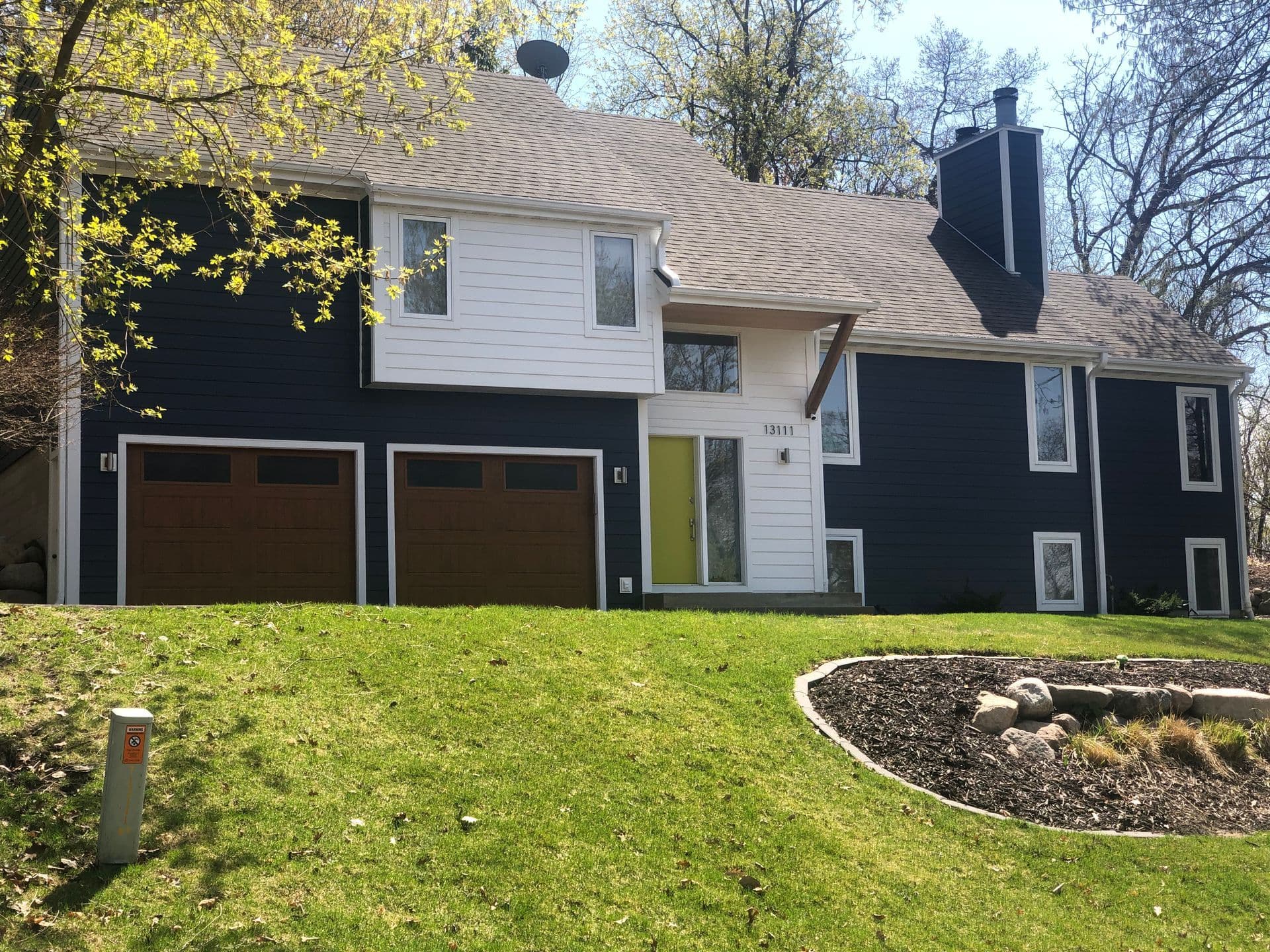
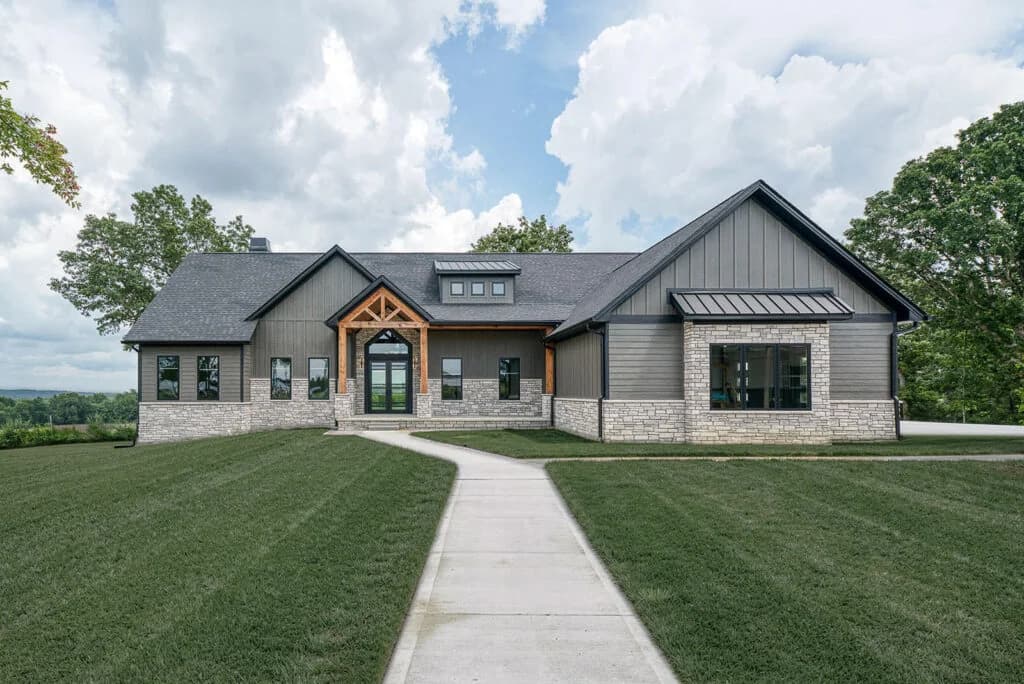
I get this question almost every week, and I'll give you the short answer right at the top so you can decide whether to keep reading: the cheapest exterior siding on the market is vinyl. Nothing else comes close on a per-square-foot installed cost.
I do install vinyl when a homeowner asks for it. It's a real product with a real place in the market. But I rarely lead with it for Twin Cities homes, and I'll explain why in a minute — along with what I actually recommend if "cheapest" is the only thing you care about.
I've been doing exterior work in the Twin Cities for decades — Edina, Plymouth, Eden Prairie, Minnetonka, Wayzata, the western suburbs and everywhere in between. I've stripped vinyl off homes in Bloomington that didn't make it ten winters. I've also installed engineered wood and fiber cement that's still going strong after fifteen. So when someone asks me about "cheap siding," I don't think about the price tag the day it goes on. I think about what it looks like the day I drive past five years later.
The Quick Answer: Cheapest to Most Expensive
For Twin Cities homes, here's how the common siding materials roughly stack up from cheapest to most expensive on installed cost:
| Siding type | Typical Twin Cities installed range | Modex installs? |
|---|---|---|
| Vinyl | $7.50 – $10 per sq ft ($750–$1,000/square) | Yes (on request) |
| Aluminum | $5 – $10 per sq ft | No |
| Engineered wood (LP SmartSide) | $8 – $14 per sq ft | Yes |
| Fiber cement (James Hardie) | $8 – $15 per sq ft | Yes |
| Steel siding (EDCO) | $11 – $18 per sq ft | Yes |
| Cedar / natural wood | $10 – $20+ per sq ft | No |
| Stone, brick, stucco | $15 – $40+ per sq ft | No |
Vinyl pricing here is Modex's real Twin Cities install range — $750 to $1,000 per square (a siding "square" is 100 square feet of wall area), which is meaningfully higher than the bottom of the national vinyl range you'll see quoted in HomeGuide or Fixr data. That's not because Modex marks vinyl up — it's because doing it right in this climate means proper house wrap, full flashing detail at every window/door, and a crew that knows how to install in our actual conditions. The $4-$5/sq ft national low end is what gets quoted by crews skipping those steps. The full pricing table above includes material plus labor plus standard accessories (trim, fasteners, house wrap, dump fees, permits). Unusual situations — three-story homes, heavy carpentry repair, lead paint abatement, custom trim packages — sit outside these ranges.
A typical Minnesota two-story with about 2,000 square feet of wall area (20 squares) lands somewhere in the $15,000–$20,000 range on vinyl, $18,000–$28,000 on engineered wood, $22,000–$32,000+ on fiber cement, and $24,000–$36,000+ on steel siding. James Hardie projects in Minnesota run anywhere from $18,000 to $40,000 depending on complexity, per MN-specific 2026 pricing data. I've put together a full breakdown of siding cost on a 2,000 sq ft Twin Cities home if you want the per-material math with what's actually in a Modex scope.
So yes — if cheapest is what you want, vinyl wins. By a lot.
Now let me tell you why I don't lead with it for most Twin Cities homes — and when it still makes sense.
Why I Don't Lead with Vinyl for Twin Cities Homes
I'm not anti-vinyl on principle. There are vinyl products today that are meaningfully better than the stuff that went up in the '90s. I've installed it for homeowners who wanted it. I've seen homes with vinyl that look fine. I'm also not going to pretend it performs the same as engineered wood or fiber cement in our climate, because it doesn't.
Here's what happens to vinyl in Minnesota, and why I steer most homeowners toward other options unless budget is the absolute hard limit.
It gets brittle when it's cold. Vinyl is plastic, and the cold-weather problem isn't my opinion — it's in the manufacturers' own install instructions. Most vinyl manufacturers won't even let you install below 20°F because the panels start cracking and splitting at install. Now picture what that means in a real Twin Cities winter — it's -15 outside, the wind's coming off Lake Minnetonka, the panels on the north side of your house are sitting at -20°F, and a snowblower throws a chunk of ice into the wall. Or a kid's hockey stick. Or a branch in a March wind event. The same impact that would dent steel or crack-but-not-destroy fiber cement will shatter cold vinyl. I've seen panels snap like crackers.
It fades. All siding fades. But vinyl fades unevenly, and once it goes you can't really fix it. Engineered wood and fiber cement and steel can be repainted. Vinyl can technically be painted, but I don't recommend it and most paint manufacturers won't warrant it. So once the south-facing wall is a different color than the north-facing wall, you're either living with it or you're replacing the whole house.
It warps. Direct sun on a dark vinyl panel in July can soften the material enough that it bows. I've inspected homes in Edina where the wall behind a south-facing grill setup looked like it had melted.
Freeze-thaw moves it around constantly. Industry data shows a 12-foot vinyl panel can expand and contract more than half an inch between summer high and winter low. We can swing 50 degrees in 24 hours during March. That's the same panel growing and shrinking against the same nail heads every single day. Eventually the nail heads chew the slot. Eventually a panel pops loose. I see this on five-year-old vinyl in Bloomington and Plymouth every spring.
Hail. I've done hundreds of post-storm inspections after the hailstorms we get every summer. Whole walls need replacement, and the older the vinyl, the harder it is to find a color match.
The look. Subjective, but I'll say it anyway. Vinyl has a thin, hollow look in person. The seams are obvious. The J-channel at corners traps water and looks cheap up close.
I'm not telling you vinyl is bad for every home, every market, every budget. In some southern markets where freeze-thaw isn't a factor and hail is rare, vinyl performs fine. In the Twin Cities, it's also the material I get called to replace the most. That's the part homeowners don't see when they're shopping installed prices. The cheap option that has to come down in twelve years isn't really the cheap option.
When vinyl still makes sense for me to install: rental properties where the owner won't be in the house long-term, tight budgets where the alternative is leaving rotted sheathing exposed for another five years, or homeowners who explicitly want vinyl and understand the tradeoffs. If that's you, I'll quote it honestly and install it well — I just want you to see the math first.
What I'd Recommend Instead, From Cheapest to Most Expensive
If you came in looking for cheap and you've gotten this far, here's how I'd line up the three siding lines I actually install — and what each one gives you for the money.
LP SmartSide (Engineered Wood) — The Best Value
If "cheapest siding worth installing" is what you're after, LP SmartSide is the answer. It's the lowest-cost product I carry, and it's cheap in the high value for the money sense.
What you're getting: wood strands treated with wax and zinc borate, bound with resin, compressed into a panel tougher than anything nature could grow. Looks like real wood. Cuts like wood. My crews install it faster than fiber cement, which keeps labor down. And it stands up to Minnesota hail better than just about anything in its price range — LP claims 200 times more impact-resistant than vinyl. I've seen what it does after a storm. That number's not marketing fluff.
Lifespan is where this product really earns its money. Industry data puts engineered wood at 20–30 years of real-world service, but LP backs the substrate with a 50-year prorated warranty. That's twice the realistic Minnesota service life of vinyl, on the same wall.
Installed range: roughly $8–$14 per square foot for the Twin Cities market in 2026. A 2,000-square-foot home lands in the $18,000–$26,000 zone.
For more depth, I wrote a whole post on how long LP SmartSide actually lasts in this climate, plus a head-to-head with James Hardie. Product details at LP SmartSide siding in Minneapolis.
James Hardie (Fiber Cement) — The Premium Standard
Hardie is the gold standard for fiber cement. Portland cement, cellulose fibers, sand. No wood in it at all. Won't burn, won't rot, termites can't eat it.
What you're paying for: a non-combustible Class A fire rating, 30-year non-prorated substrate warranty, and a ColorPlus factory finish warranted 15 years against fading. In a state with house fires and freeze-thaw cycles, that matters.
Installed range: roughly $8–$15 per square foot for Minnesota installs in 2026, per MN-specific 2026 pricing data. Same 2,000-square-foot home generally lands in the $22,000–$32,000 zone, though high-complexity projects with full ColorPlus + new flashing details can push past $40,000. Hardie weighs about three times what LP SmartSide does, which means more labor and silica-dust management during cutting. That's part of why it costs more. ColorPlus factory finish adds another $1–$3 per square foot but eliminates field-painting risk in unpredictable Minnesota weather.
I get asked constantly, "does water get behind Hardie board?" Short answer — yes, water gets behind every siding product. The question is whether the moisture-management layer underneath handles it. See James Hardie siding in Minneapolis for the full product page.
EDCO Steel Siding — The Long-Game Pick
The one most homeowners don't even know to ask about, and the most overlooked siding in the Twin Cities market.
EDCO is a Minnesota company based in Hopkins — they make their product about fifteen minutes from my office. Textured baked-on finish that mimics cedar or smooth lap, won't burn, won't rot, won't fade, shrugs off hail in a way nothing else really does. I've had homeowners in Plymouth call me after a major hailstorm and tell me their EDCO walls didn't have a single mark while their neighbor's vinyl was totaled.
The downside is cost. Installed range is roughly $11–$18 per square foot in the Twin Cities — Angi's 2026 metal-siding data puts the national average for steel lap right around $11–$14/sq ft installed, and EDCO's higher-end textured finishes push the top of the range up. Not the cheapest option — but if you're staying in your house for 25–40 years, it might be the cheapest over the life of the home, because you're probably never replacing it. See EDCO steel siding.
The Real Honest Answer: Cheap Costs More Long-Term
I'll tell you what I tell every homeowner looking at three quotes at their kitchen table:
The cheapest siding to install is almost never the cheapest siding to own.
Vinyl on a Twin Cities home goes up for $15,000–$20,000. Twelve years later you're replacing whole walls after a hailstorm, or the corners are popping out of the J-channel. So you spend another $20,000+ in today's dollars. That's $35,000+ over 24 years for a house that looks tired by year fifteen. (Here's my full take on how long vinyl siding actually lasts in Minnesota — the brochure says 20-40 years, the Twin Cities reality is closer to 15-20.)
LP SmartSide on the same house: $20,000 up front, a refresh somewhere between year 15 and year 20 for a few thousand, still looking sharp at year 25. Probably never replaced.
The math is the math. "Cheap" deserves a longer time horizon than the day you sign the contract.
What I'd Do With Different Budgets
A few real scenarios, written the way I'd say them in your living room:
"I have $14,000 and that's it." Honestly? Don't replace your siding. Patch what's failing, hire a painter to refresh what's still good, wait a year, save another $5,000, and do it right. Bad siding done cheap is throwing money away.
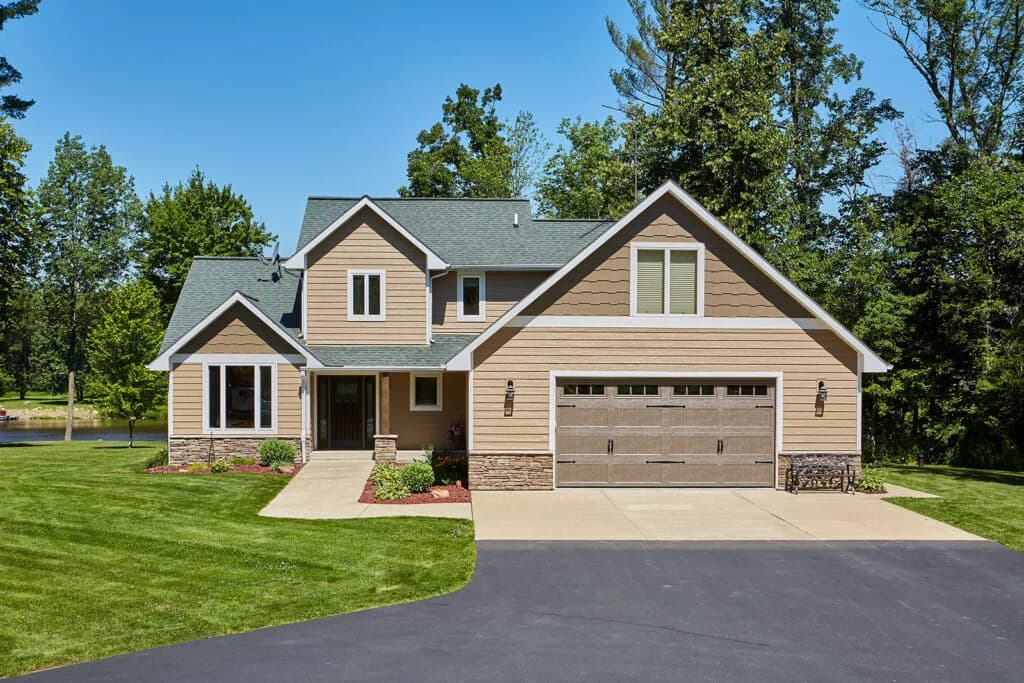
"I have $18,000–$22,000." LP SmartSide on a typical home. Best value siding I install — authentic wood look, real Minnesota durability, 50-year warranty.
"I have $24,000–$30,000." This is where you start choosing on style. James Hardie for fire resistance and the strongest near-term warranty. LP SmartSide with the premium Naturals finish if you want the wood look done right. EDCO steel if you want to never think about siding again.
"Money isn't the issue." EDCO steel for the long game, James Hardie architectural panels for the look, or LP SmartSide nickel gap for a modern aesthetic.
What's NOT a Way to Save Money on Siding
A few things I want to name directly, because I see them in the market constantly:
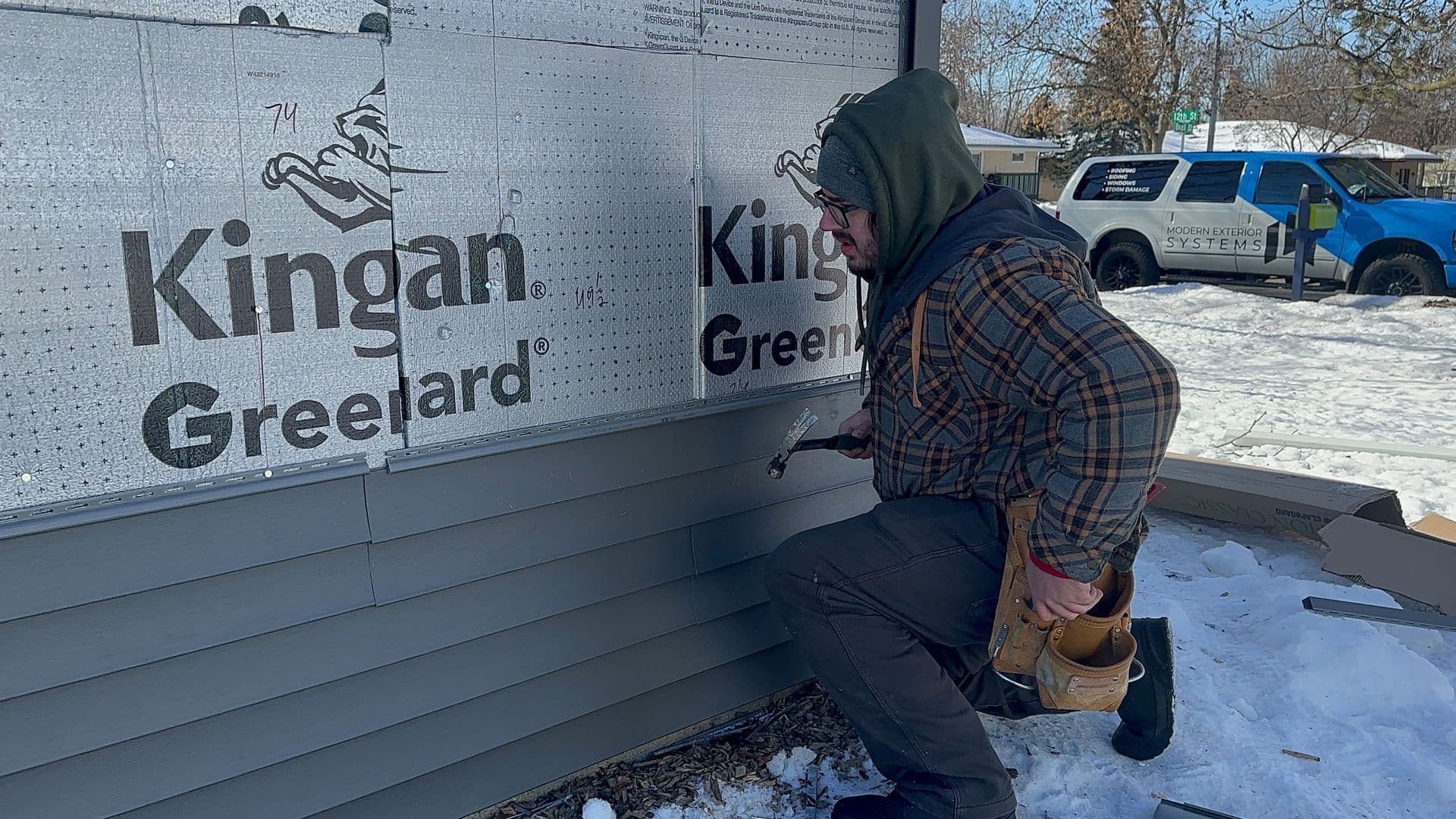
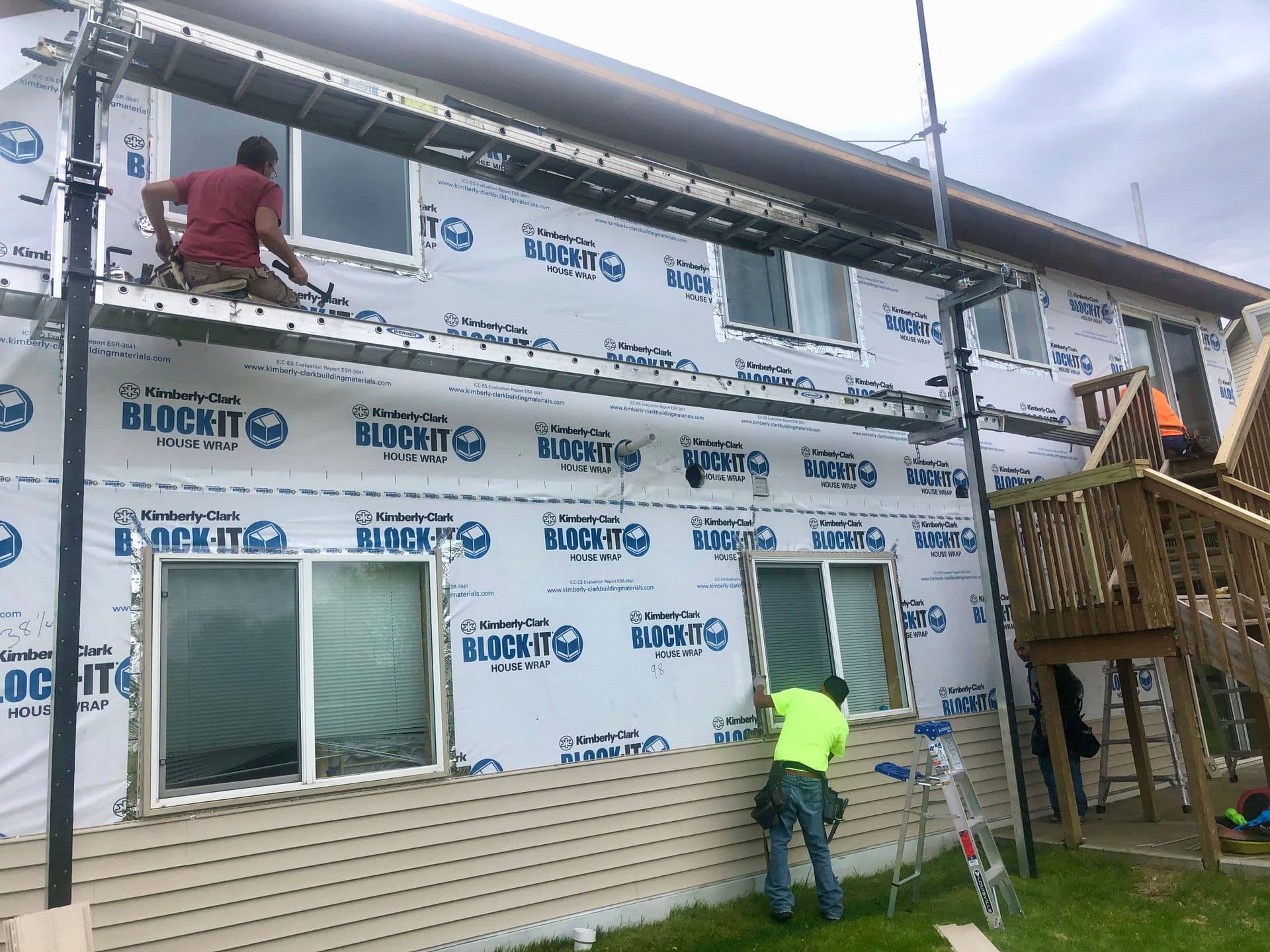
Don't skip house wrap. Some contractors will skip the WRB (weather-resistive barrier) to save a few hundred bucks. The siding will still go up. It will also rot the OSB underneath in seven years.
Don't skip carpentry repair. If there's rot in the sheathing underneath, fix it before you put the new siding on. I've seen homeowners get talked into "we'll just cover it up." Five years later the wall is failing from the inside.
Don't shop on the cheapest quote. A $14,000 quote against a $20,000 quote on the same scope isn't a deal — it's a warning sign. Somebody's cutting corners on labor, insurance, permits, or material. The premium on doing it right is the cheapest insurance you'll ever buy.
How We Quote It
I'll come measure your house, look at what's underneath, check the existing flashings around windows and doors, and write you a quote within 48 hours. You'll get the scope written out clearly — what we're tearing off, what we're installing, what's included on flashings and trim, what the warranty covers — and a single price for each siding option you want to compare. You can hold quotes side by side and make a real decision.
For deeper context on Twin Cities pricing across the product spectrum, I've put together a full siding cost in Minnesota breakdown that's worth a read before you sign anything with anybody.
Frequently Asked Questions
What is the cheapest exterior siding?
Vinyl is the cheapest exterior siding on the market — Modex's real Twin Cities install range is $750 to $1,000 per square ($7.50–$10/sq ft), with builder-grade lap on the low end and insulated or premium vinyl pushing the top of the range. I install vinyl when a homeowner specifically asks for it, but for most Twin Cities homes I steer toward LP SmartSide engineered wood at roughly $8–$14 per square foot installed — better climate performance, better hail resilience, and meaningfully longer service life.
Is vinyl siding worth it in Minnesota?
In my experience working in the Twin Cities, vinyl underperforms in three areas that matter here: cold-weather impact resistance (manufacturers themselves restrict install below 20°F because the panels start cracking), hail durability (it cracks more easily than engineered wood or steel), and long-term appearance (it fades unevenly and can't really be repainted). I'll install it when homeowners want it, but I rarely lead with it because of the callback rate I see across the metro.
What's the cheapest siding that will last?
LP SmartSide engineered wood is the cheapest siding I'd recommend for Minnesota homes. It typically installs for $8–$14 per square foot in the Twin Cities, carries a 50-year prorated warranty on the substrate, holds up to hail and cold, and looks like real wood. It's the best price-to-durability ratio I've found in two decades of contracting in the Twin Cities.
How much does it cost to side a 2,000 sq ft house in Minnesota?
Rough Twin Cities ranges for a typical 2,000-square-foot home (20 squares of wall) in 2026: vinyl $15,000–$20,000, LP SmartSide $18,000–$28,000, James Hardie $22,000–$32,000 (up to $40K on complex projects), EDCO steel $24,000–$36,000. Final number depends on the home's wall area, trim complexity, repair needs, and the product line selected.
Is cheap siding a bad idea?
It depends what "cheap" means. The cheapest siding to install is almost never the cheapest siding to own. Vinyl might save you $6,000 up front but cost you a full replacement within 12–15 years, while engineered wood or fiber cement is often still in service at year 25+. If you can stretch your budget to LP SmartSide, you'll save money over the life of the home.
Can I just paint my old siding to save money?
If your existing wood, engineered wood, or fiber cement siding is structurally sound — no rot, no failed seams, no major impact damage — a quality paint job can extend its life 8–10 years for a fraction of the replacement cost. If it's vinyl, painting isn't a real option. If there's rot or hail damage underneath, paint is a band-aid that costs you more later.
The Bottom Line
The cheapest exterior siding you can buy is vinyl. The cheapest exterior siding I'd actually put on your house is LP SmartSide. The longest-lasting siding I install is EDCO steel. The premium pick is James Hardie.
The right answer for your home depends on your budget, your time horizon in the house, your exposure to hail, and what you want it to look like when you pull into the driveway. Call me at 952-206-6339 or request a free written quote and I'll come measure, give you honest options, and let you make the call. No high-pressure sales, no upcharge games, no "this price is only good today." That's not how I work.
If you want to see what we actually install, the siding installation in Minneapolis page covers our full scope of work.
About Modern Exterior Systems
Modern Exterior Systems is a women-owned, family-operated roofing and exterior contractor based in Eden Prairie, MN, serving the Twin Cities metro. LP SmartSide Preferred Contractor, James Hardie Preferred Contractor, and EDCO steel siding installer. Lifetime workmanship warranty on every residential project. an A+ rating with the BBB. MN License #BC762305.