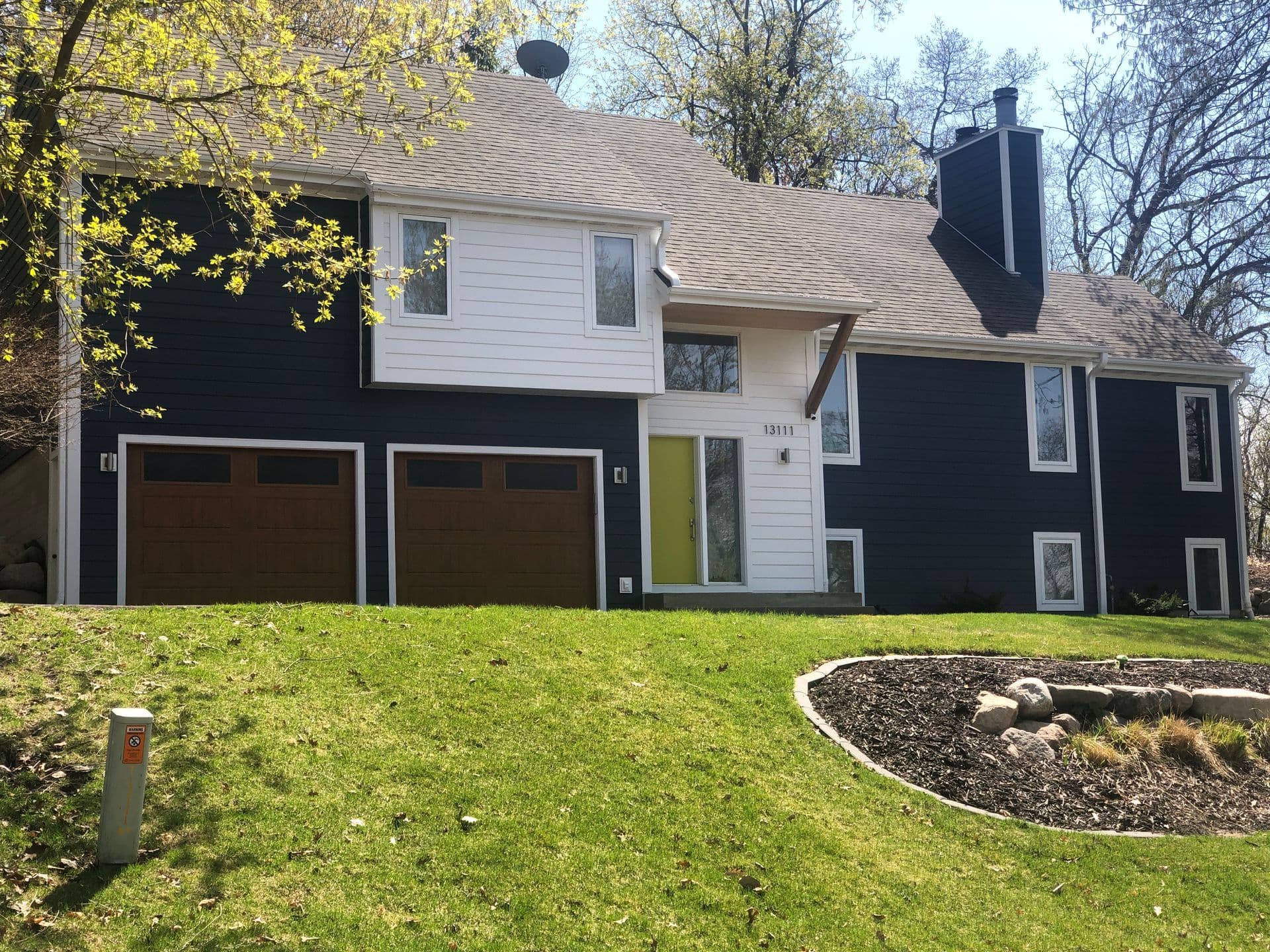
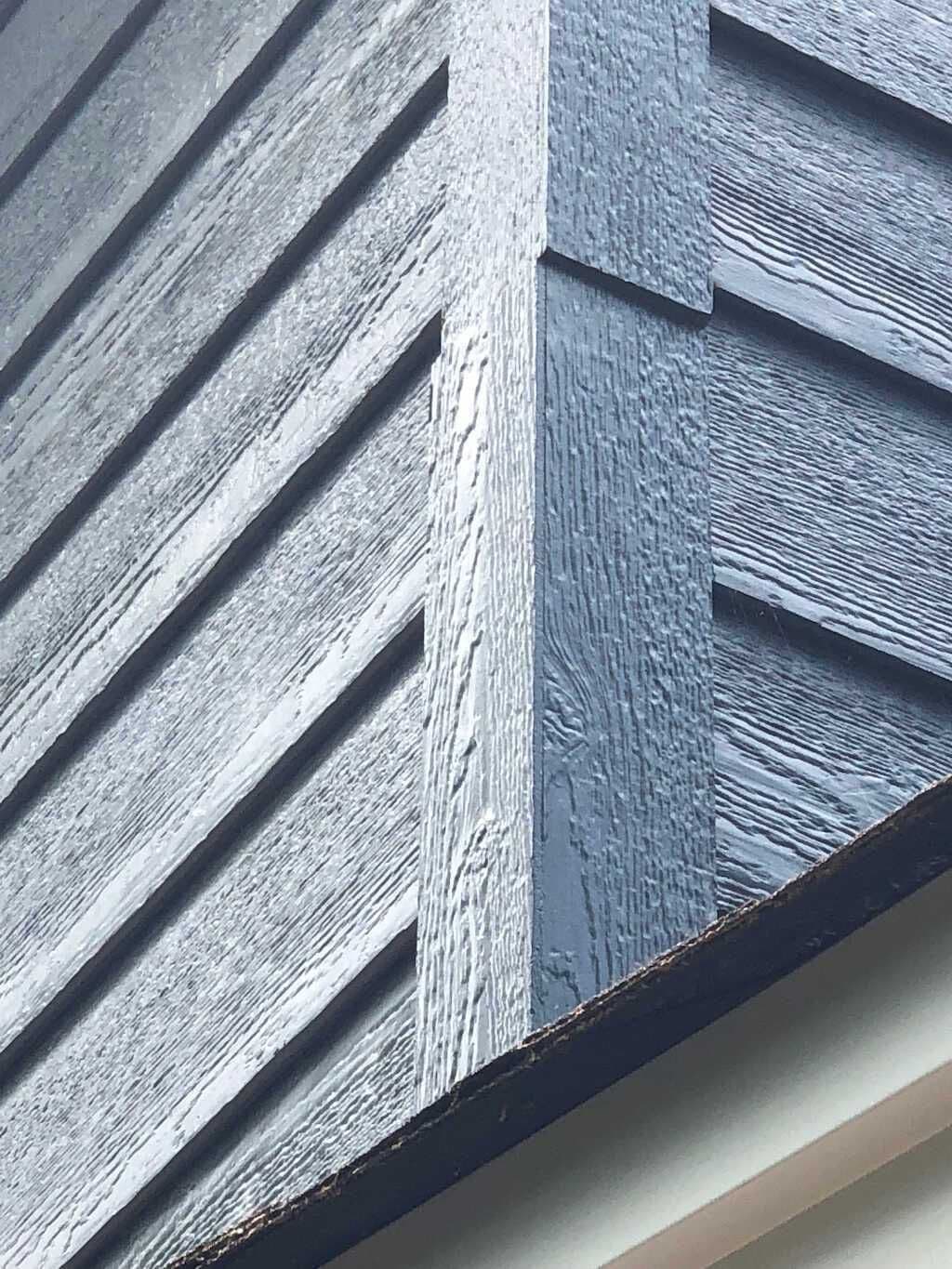
Most siding claims I get called about start the same way. Hail came through — usually out of the west or northwest — and hammered one or two sides of the house. The north and east walls look untouched. The homeowner's insurance adjuster shows up, agrees the west wall took damage, and offers to pay for... the west wall.
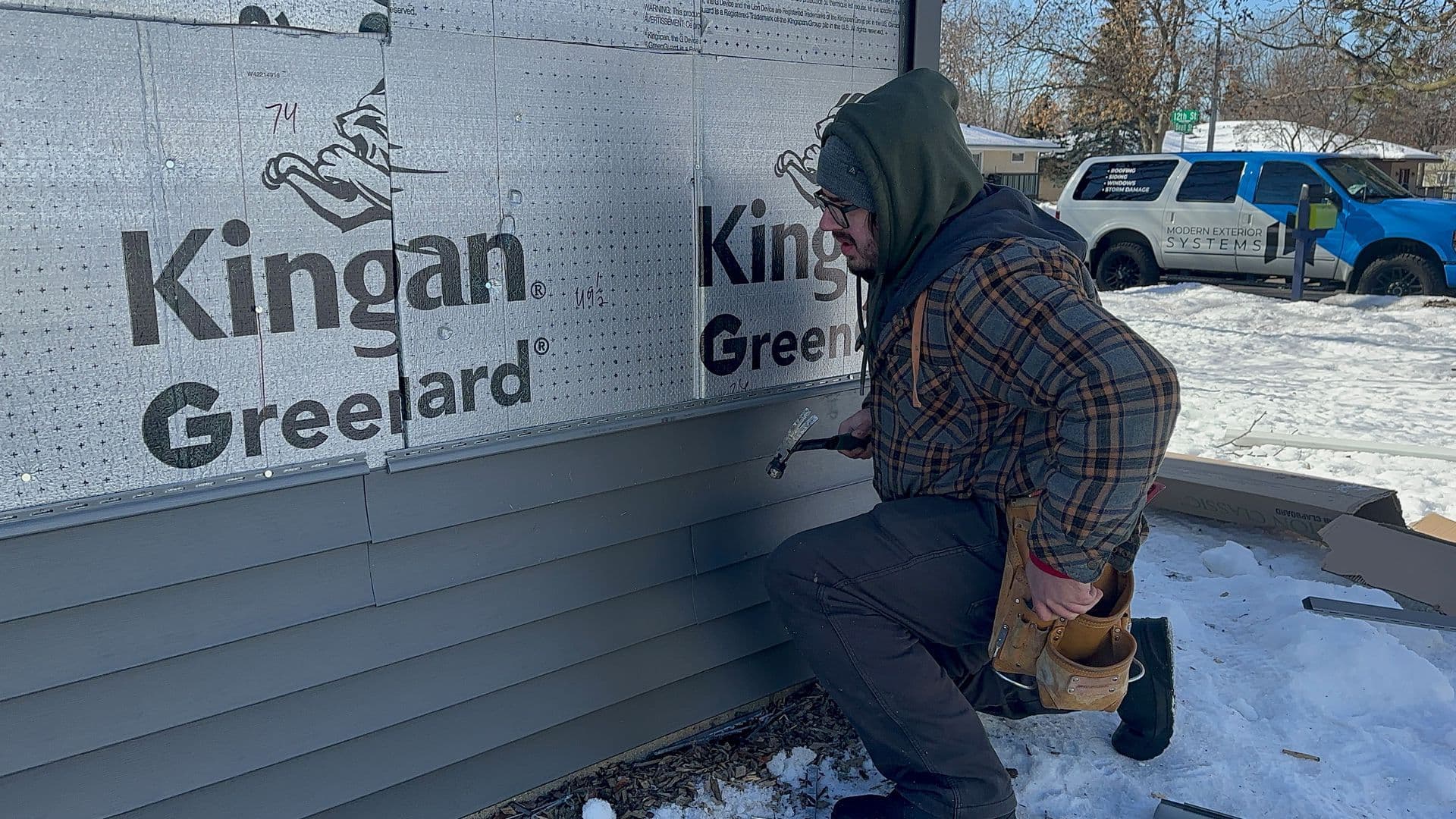
Then someone checks whether the siding is still made. It isn't. The color was discontinued in 2019, or the profile changed, or the 12-year-old panels have faded three shades lighter than anything on a sample board. And now you're looking at a house with one brand-new wall that doesn't match the other three.
I've been doing exterior work in the Twin Cities for two decades, and I'll tell you something most contractors won't put in writing: the matching question is where siding claims are won or lost in Minnesota. Not the damage assessment. The match.
Before we go further: I'm a contractor, not an insurance agent or a lawyer. Your policy language controls your claim, and policies differ. For coverage questions, talk to a licensed insurance agent; for a dispute, a Minnesota attorney who handles property claims. What follows is what I've seen doing this work — use it to ask better questions, not as legal advice.
The short answer
Hail damage to siding is generally covered by Minnesota homeowners policies the same way roof damage is. The fight is almost never about whether the dented wall gets paid for — it's about whether the insurer must replace undamaged siding so your house matches. Minnesota's Supreme Court answered that question in 2014: under a replacement-cost policy, "comparable material and quality" means a reasonable color match. If new panels can't reasonably match your existing faded or discontinued siding, that standard can require replacing all of it. You file your own claim, you document everything, and you don't sign anything on the driveway.
Why siding claims are different from roof claims
A roof is one plane of one material, and nobody sees it from the street. When we replace a hail-hit roof, matching isn't a conversation.
Siding is the opposite. It's the most visible surface on your house, and vinyl and steel product lines turn over constantly. Manufacturers retire colors every few years. Profiles change widths. And Minnesota sun does real work on siding — panels facing south and west fade noticeably inside a decade. So even when the product is technically still made, the replacement panel that comes off the truck won't look like what's been on your wall since the Obama administration.
That's not a corner case. On hail claims we worked after the June 2023 cycle in the western suburbs, discontinued or unmatchable siding came up on more claims than not. If your siding is more than eight or ten years old, assume matching will be the central question of your claim.
What Minnesota law actually says about matching
The case that matters is Cedar Bluff Townhome Condominium Association v. American Family — decided by the Minnesota Supreme Court in December 2014.
The facts sound familiar: an October 2011 hailstorm damaged siding on all 20 buildings of a townhome complex. The siding was 11 years old and faded. Panels with the same specs were still available — but not in a color that matched. The policy promised replacement with property of "comparable material and quality."
The court held that "comparable material and quality" means a reasonable color match between new and existing siding — something less than identical, but reasonable. And because no reasonable match existed, replacing the damaged panels with panels of comparable material and quality required replacing all the siding.
Three things I tell homeowners about this ruling:
- It applies to replacement-cost policies. That's what most Twin Cities homeowners carry, but check your declarations page. An actual-cash-value policy is a different conversation.
- It's not automatic. Insurers don't mail you a check for four walls because one got dented. Adjusters often order a lab match test on a sample panel, and "reasonable match" gets argued panel by panel. The ruling gives you standing; it doesn't remove the work.
- The dispute path is usually appraisal, not a lawsuit. Most Minnesota policies contain an appraisal clause — each side picks an appraiser, the appraisers pick an umpire, and the panel decides the scope. Cedar Bluff itself was an appraisal award the insurer challenged and lost.
How a Minnesota siding claim actually works, step by step
1. Document before anyone touches anything. Photos of every wall, close-ups of the hits, wide shots showing which elevations took damage, and the date of the storm. Hail dents in vinyl look like half-moon cracks or shattered spots; in steel, rounded dimples; in LP and other engineered wood, crushed or fractured spots along the bottom edges of laps.
2. Get an honest damage assessment first. Not every hailstorm that rattles the windows damages siding, and I'd rather tell you that before you open a claim. We do free hail inspections — if the damage isn't there, or isn't worth your deductible, you'll hear that from us plainly.
3. File your own claim. You call your carrier. Not a contractor "handling it for you." In Minnesota, you are the policyholder and the claim is yours — any contractor who wants to run the claim, or who offers to "waive your deductible," is showing you exactly who they are. Deductible waiving violates Minnesota law (Minn. Stat. 325E.66), and the companies that do it build the deductible back into the price anyway.
4. Be home for the adjuster's inspection. Have your photos and your contractor's assessment in hand. If the siding is discontinued or badly faded, raise the matching question at this visit — ask how the carrier intends to achieve comparable material and quality across the house.
5. Read the scope of loss line by line. The first estimate frequently covers only the damaged elevations. If replacement panels can't reasonably match, that scope is arguably short under Cedar Bluff — and a documented product-discontinuation letter or a failed match test is the evidence that reopens it.
6. If you hit a wall, use the process. Ask the adjuster to escalate, invoke appraisal if your policy allows it, or file a complaint with the Minnesota Department of Commerce. Homeowners who calmly document and persist do better than homeowners who yell — every time.
What most homeowners get wrong
Accepting a one-wall settlement without asking the matching question. If your siding can be reasonably matched, one wall is a fair outcome. If it can't, you may have accepted a patchwork house and left the rest of the claim on the table.
Letting the first contractor who knocks own the claim. After every metro hailstorm, the out-of-state crews arrive within days. Storm chasers close on fear and speed. Fair contractors put the assessment in writing and let you decide on your own schedule. No pressure. No same-day close.
Confusing cosmetic exclusions with a denial. Some policies carry cosmetic-damage exclusions, most commonly for metal. Whether a dent is "cosmetic" or has broken the siding's weather barrier is a judgment call — get a second opinion before accepting that word.
Waiting. Minnesota policies set time limits on claims, and memories of which storm did what fade fast. If you suspect damage, get eyes on it the same season.
Joe's note — the silver lining nobody expects
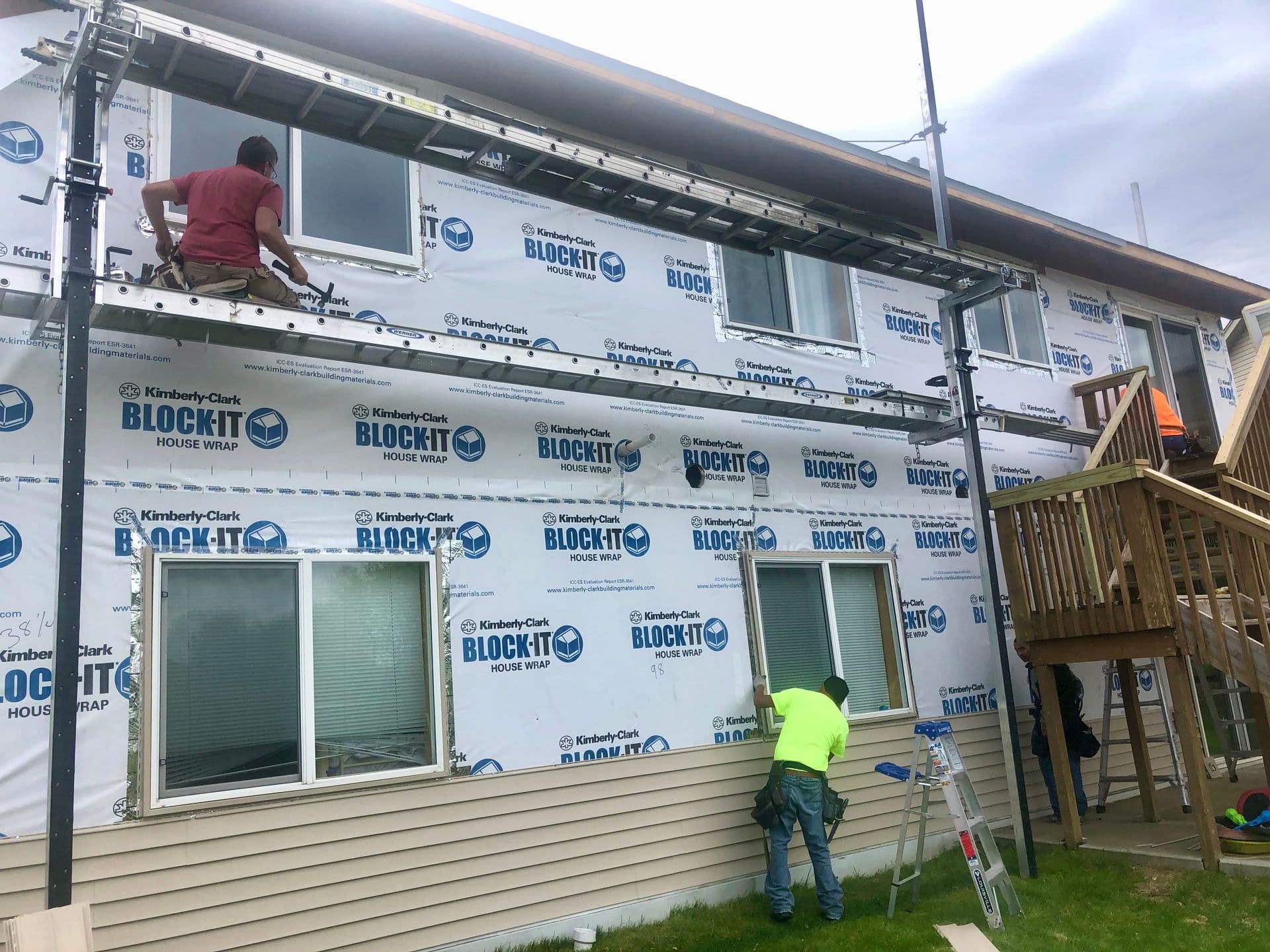
Here's the strange truth about the matching rule: some of the best-looking siding jobs we've done started as a two-wall hail claim. When matching genuinely fails and the scope becomes the whole house, homeowners who'd been living with tired, faded panels end up choosing new LP SmartSide or James Hardie in a current color — with insurance covering the replacement-cost share and the homeowner covering their deductible and any upgrades. That's not a loophole; it's the policy doing what you've paid premiums for it to do. My job is the honest version of that conversation: what's actually damaged, what actually matches, and what the policy actually owes.
If you're staring at a roof claim too, the same storm usually raises both — the roof version of this guide is here.
FAQ
Does homeowners insurance cover hail damage to siding in Minnesota?
Generally yes — hail is a covered peril on standard Minnesota homeowners policies, subject to your deductible. The real questions are scope (which walls) and matching (whether undamaged siding must be replaced to achieve a reasonable match). Check for cosmetic-damage exclusions, especially on metal siding.
What if my siding color has been discontinued?
That's the matching problem, and Minnesota's Cedar Bluff decision speaks to it directly: replacement-cost policies promising "comparable material and quality" require a reasonable color match. If no reasonable match exists — discontinued color, retired profile, heavy fade — the standard can require replacing all the siding. Document the discontinuation in writing from a supplier or the manufacturer.
Will insurance replace siding on all four walls if only one was hit?
Sometimes. If new panels reasonably match your existing siding, expect the damaged elevations only. If they can't reasonably match, Cedar Bluff supports whole-house scope under a replacement-cost policy. It's argued claim by claim — the match evidence decides it.
Should a contractor file the insurance claim for me?
No. You file your own claim — in Minnesota the claim belongs to the policyholder, and contractors who want to run it (or "waive" your deductible, which is illegal here under Minn. Stat. 325E.66) are a red flag. A fair contractor documents the damage, gives you a written scope, and meets your adjuster with you.
What does hail damage look like on different siding types?
Vinyl cracks — half-moon fractures and shattered impact points, worst in cold weather when panels are brittle. Steel dents but rarely breaks through. LP SmartSide and other engineered wood show crushed edges and fractured spots. Fiber cement chips at impact points. Damage concentrates on the walls facing the storm, usually south and west in metro storms.
How long do I have to file a hail claim in Minnesota?
Your policy sets the deadline, and they vary — commonly one to two years from the date of loss, sometimes less for supplemental claims. Don't test it. Get an inspection the same season as the storm, and note the storm date on everything you file.
Ready for an honest read on your siding — storm damage or not? Call Modern Exterior Systems at 952-206-6339. I'll come out, photograph what's actually there, and give you a written line-item assessment you can hand to your adjuster or your recycling bin. Free measurement, honest numbers, no pressure. Or request your free estimate online.
Modern Exterior Systems is a women-owned, family-operated roofing and exterior contractor based in Eden Prairie, MN, serving the Twin Cities metro. Owner Joe Dvorak brings two decades of hands-on construction experience, CertainTeed ShingleMaster and Malarkey Emerald Pro certifications, and a LIFETIME workmanship warranty to every project. BBB A+ rating.