I install all three — TPO and EPDM most, modified bitumen where it fits — both ballasted and fully adhered, on everything from houses to four-story commercial buildings. So I don't have a dog in the "which membrane is best" fight. The honest answer is they're all good systems, and the right one depends on your building, not on what a salesman installs fastest. Here's how I actually decide.
The quick answer
TPO is my default for most commercial and a lot of residential low-slope roofs — a white, energy-efficient, heat-welded membrane that handles Minnesota's swings well. EPDM is proven black rubber with a decades-long track record, and it shines on ballasted systems and roofs that take a beating. Modified bitumen is a tough, layered asphalt system that earns its keep on smaller, cut-up roofs and spots that see foot traffic. Pick based on building type, roof access, and how the roof gets used.
TPO — the energy-efficient workhorse
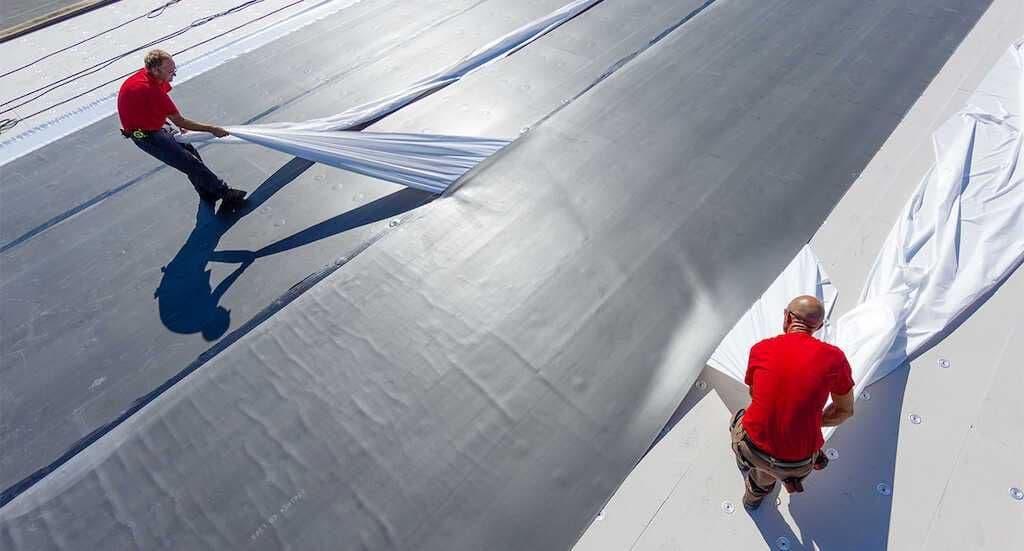
TPO is a thermoplastic membrane, usually white, with heat-welded seams. Those welded seams are its biggest strength: done right, they're as strong as the membrane itself, which is exactly where most flat roofs fail.
My take: for a typical Twin Cities commercial roof or a sunny low-slope section, TPO is hard to beat. The white surface reflects heat and can shave summer cooling load, and the welded seams hold up. It's what I reach for most.
What I don't love about it: TPO formulations have changed over the years, so quality varies by manufacturer and product line — a cheap TPO is a real downgrade. And the welds have to be done right; a sloppy weld is a future leak. This is a system where the installer matters as much as the membrane.
EPDM — the proven rubber
EPDM is a synthetic rubber membrane, almost always black, that's been on roofs for 40-plus years. We know exactly how it ages because we've watched it age.
My take: EPDM is the system I trust on ballasted roofs and on buildings that take abuse. The rubber is flexible in cold, which matters a lot in Minnesota, and the long track record means no surprises.
What I don't love about it: the black surface absorbs heat instead of reflecting it, so it's not the energy play TPO is. And traditional EPDM seams are glued or taped rather than welded — modern tapes are good, but seam detailing is the thing to get right.
Modified bitumen — the tough, layered option
Modified bitumen ("mod-bit") is asphalt-based, applied in layers, either torch-down or peel-and-stick. Think of it as a modern, reinforced descendant of the old built-up tar roofs.
My take: mod-bit is great on smaller roofs, cut-up roofs with a lot of penetrations, and areas that see foot traffic — it's tough and puncture-resistant. The multi-layer build gives you redundancy.
What I don't love about it: it's labor-intensive to install well, the torch-down version is literally working with open flame (so installer care matters), and it's not the reflective, energy-efficient surface TPO is. On a big open commercial field, a single-ply usually makes more sense.
Ballasted vs. fully adhered (because it changes the answer)
How the membrane is held down matters as much as which membrane it is. A ballasted roof is loose-laid and weighted down with stone or pavers — fast, cost-effective, and forgiving, but it needs a building that can carry the weight. A fully adhered roof is glued down across the whole field — cleaner for high-wind exposure and buildings that can't take ballast weight, and the only real option on a steeper low-slope or a roof you can see. I install both, and the building tells me which one it needs.
How they stack up
| TPO | EPDM | Modified Bitumen | |
|---|---|---|---|
| Surface | White, reflective | Black, absorbs heat | Dark, layered asphalt |
| Seams | Heat-welded (strong) | Glued/taped | Fused layers |
| Energy efficiency | Best | Lowest | Low |
| Best fit | Most commercial + low-slope | Ballasted, high-abuse | Small/cut-up, foot traffic |
| Typical installed cost | $5–$10/sq ft | $4–$9/sq ft | $4–$8.50/sq ft |
The bottom line from a guy who installs all three
If your building can carry it and you want energy efficiency, TPO is usually my pick. If you want a proven rubber on a ballasted system or a roof that takes a beating, EPDM. If it's a small, cut-up, or high-traffic roof, mod-bit. But honestly, the single biggest factor in whether your flat roof lasts 25 years isn't the membrane — it's whether the seams and flashings were installed right. Pick a contractor who self-performs and stands behind the detail work, then pick the membrane. (For installed price ranges by system, see flat roof replacement cost.)
FAQ
Is TPO better than EPDM?
Neither is universally better — they're built for different jobs. TPO brings welded seams and an energy-efficient reflective surface, which suits most commercial and sunny low-slope roofs. EPDM is proven rubber that's flexible in cold and excellent on ballasted, high-abuse roofs. The right pick depends on your building, not a blanket ranking.
How long do TPO and EPDM roofs last in Minnesota?
Both typically last 20–30 years here when installed well and maintained. Modified bitumen is in a similar range. In every case, seam quality and drainage matter more to lifespan than the membrane brand — standing water and neglected flashings are what cut a flat roof short.
What's the most energy-efficient flat roof?
TPO's white reflective surface makes it the most energy-efficient of the three, reflecting heat and reducing summer cooling load. EPDM's black surface absorbs heat, and modified bitumen is also dark. If energy cost is a priority, a reflective TPO (or a coated system) is the move.
What's the difference between ballasted and fully adhered?
Ballasted roofs are loose-laid and held down by stone or pavers — fast and cost-effective, but they require a building that can carry the weight. Fully adhered roofs are glued down across the field — better for high wind and buildings that can't take ballast. We install both and recommend based on your structure and exposure.
Which flat roof is best for a commercial building?
For most Twin Cities commercial buildings — office, warehouse, retail — a fully adhered or ballasted TPO or EPDM system is the workhorse choice. Mod-bit fits smaller or cut-up roofs and high-traffic areas. The best system is the one matched to your building's structure, access, and how the roof gets used.
Can these go on a house, not just a commercial building?
Yes. Plenty of Twin Cities homes have flat or low-slope sections — porches, additions, modern flat-roof designs — and TPO, EPDM, and mod-bit all work residentially. Residential low-slope work carries our lifetime workmanship warranty.
Not sure which flat roof your building needs? Call Modern Exterior Systems at 952-206-6339 for a free on-roof inspection. We install all three and we'll tell you straight which fits your building — flat roof replacement across the Twin Cities.
Modern Exterior Systems is a women-owned, family-operated roofing and exterior contractor based in Eden Prairie, MN, serving Minneapolis, St. Paul, and the Twin Cities metro. Owner Joe Dvorak brings 20+ years of hands-on construction experience, and backs every project with a workmanship warranty. an A+ rating with the BBB.