



That haze you can't wipe off — the one trapped inside the glass, between the panes — is the single most common window complaint I get in the Twin Cities. And it's the one homeowners are most confused about, because it looks like a cleaning problem and it isn't. You can scrub that glass all day. It's fogged on the inside.
Here's the straight answer on what's actually happening, whether you can fix it, and when it's telling you the window's done.
The short answer
A foggy window means the seal on its insulated glass unit (the sealed sandwich of two panes with gas in between) has failed. Once that seal goes, the insulating gas leaks out and humid air seeps in — and that air fogs up when the temperature swings. You can't re-seal it. Your three real options are: replace the glass unit only, replace the whole window, or live with it. Which one's right depends on the age and condition of the rest of the window.
What's actually going on inside a foggy window
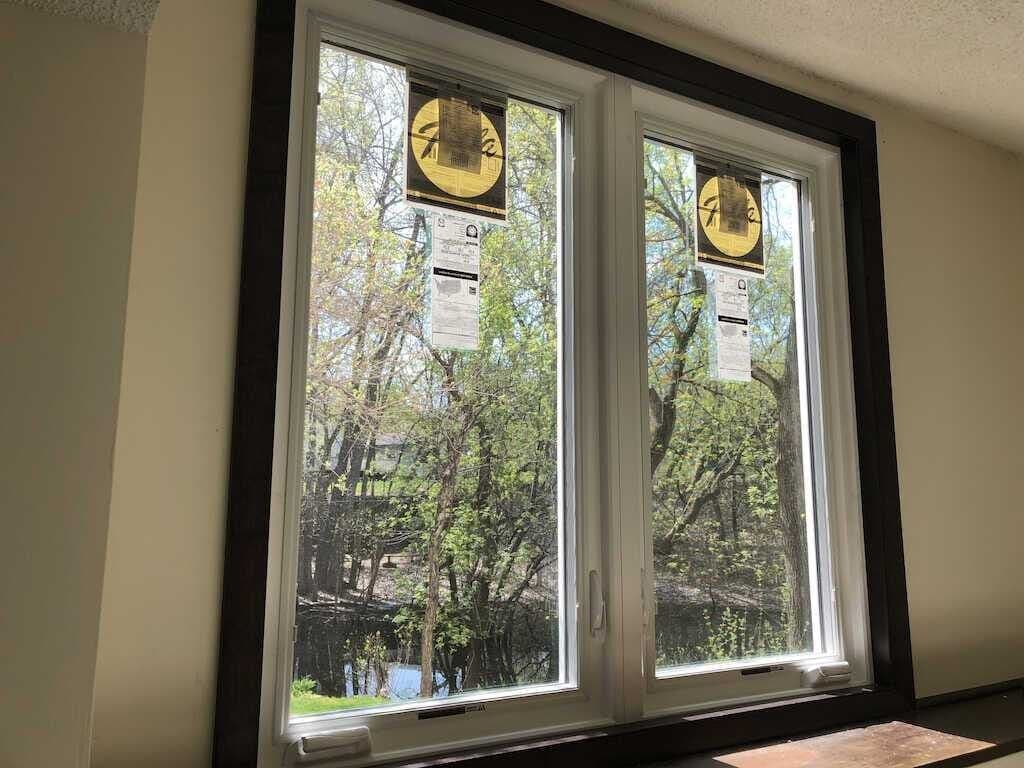
A modern window isn't one piece of glass. It's an insulated glass unit — two (or three) panes with a sealed pocket of argon or krypton gas between them. That gas, and the airtight seal around the edge, are what keep the cold out. It's the whole point of a double- or triple-pane window.
When that edge seal fails — and in Minnesota it fails faster, because every -20°F-to-thaw swing flexes it — two things happen. The insulating gas escapes, so the window stops insulating like it should. And humid air works its way in. When the glass gets cold, that trapped humidity condenses into the fog you're looking at, or in winter, frost. Sometimes you'll even see a permanent cloudy film where minerals from the moisture have etched the glass.
So the fog isn't the problem. It's the symptom. The real problem is that window isn't doing its job anymore.
Can you actually fix a foggy window?
Sort of. Here are the real options, honestly ranked.
Option 1: Replace the insulated glass unit only
If the window frame and sash are still in good shape — solid, operating smoothly, not that old — you can often replace just the glass unit and keep the existing frame. A new sealed unit goes back into your good frame. It's the cheapest real fix, and on a newer window it's the one I'll point you to.
The catch: it has to be the right kind of window for it, the frame has to be genuinely sound, and on some older or builder-grade units the glass isn't economically replaceable — by the time you source and fit it, you're close to the cost of a new window that's better in every way.
Option 2: "Defogging" services
You'll find companies that drill a tiny hole, flush the moisture out, and seal it. I'll be honest about this one: it clears the look of the fog, but it does not restore the insulating gas or the seal. You've still got a window that lost its R-value. It can be a stopgap if you're selling next month and want the glass to look clear. As a real fix, it isn't one.
Option 3: Replace the window
If the frame's tired, the window's from the '80s or '90s, or you've got fog showing up across several windows, replacing the unit is throwing good money after bad. At that point a new window gets you the seal, the gas, a better frame, and a fresh warranty — and you're not back here in two years on the next one.
How I decide, on your actual house
| Your situation | What I'd usually do |
|---|---|
| One foggy window, newer and good frame | Replace the glass unit only |
| Foggy window, but frame is rotted or sticking | Replace the window |
| Several windows fogging at once | Replace (the rest are close behind) |
| Original builder windows, 20+ years old | Replace |
| Selling in 30 days, cosmetic only | Defog as a stopgap — and disclose it |
The deciding factor is almost always the frame. Good frame, isolated fog: fix the glass. Failing frame or fog spreading window to window: replace. That's the same way I look at every window in my full signs-you-need-new-windows breakdown.
What it costs
A single insulated glass unit replacement is the budget option — far less than a full window — but the exact number depends on the size, whether it's tempered or low-E, and how the sash comes apart. A full replacement window installed runs more, but you're buying the whole system and a warranty. I'll give you both numbers when I look at it so you can decide with real figures, not guesses. (Here's the bigger picture on window replacement cost in Minnesota.)
One thing worth knowing: a failed seal from normal age and wear is not an insurance claim. Insurance covers sudden damage from a covered event — a rock, hail, a break-in — not seals that wore out. (More on what window insurance does and doesn't cover.)
Joe's Note
Don't ignore a foggy window because it's "just cosmetic." It isn't cosmetic. That window has stopped insulating, which means in January you're paying to heat the gap between your panes, and the cold surface can start driving condensation and frost that, over time, works into the sash and sill. A failed seal is a slow problem that gets more expensive the longer it sits. Catch it on one window and it's a cheap fix. Let it spread to the whole house and it's a project.
When it is time, here's how to tell repair from replacement across the board, and the ProVia, Kolbe, and Pella lines I install across the Twin Cities.
FAQ
Why are my windows foggy on the inside between the panes?
The seal on the insulated glass unit has failed. That lets the insulating gas leak out and humid air seep in; when the glass gets cold, that moisture condenses into fog or frost between the panes. It's not a cleaning problem — the fog is on a surface you can't reach — and it means the window has lost its insulating value.
Can a foggy window be repaired without replacing the whole window?
Often yes, if the frame and sash are sound — you can replace just the insulated glass unit and keep the frame. That's the cheapest real fix. It's not worth it when the frame is failing, the window's very old, or several windows are fogging at once; at that point full replacement makes more sense.
Does window defogging actually work?
It clears the appearance of the fog, but it does not restore the insulating gas or reseal the unit, so the window still won't insulate properly. It can be a short-term cosmetic stopgap — for example, if you're selling soon — but it's not a permanent fix, and you should disclose it to a buyer.
Is a foggy window covered by homeowners insurance?
Generally no. A seal that failed from age and normal wear isn't a covered peril. Insurance covers sudden, accidental damage — hail, a thrown rock, a break-in. If your fog came from a window that simply wore out, that's a maintenance cost, not a claim.
How long before a foggy window gets worse?
There's no exact clock, but it doesn't reverse — once a seal fails, that window keeps underperforming, and the trapped moisture can etch the glass and, over time, feed condensation that works into the frame. One foggy window is a cheap fix today; ignore it and you risk frame damage and more windows following.
Should I replace all my windows if only one is foggy?
Not necessarily. One isolated failure on an otherwise good window is a single fix. But if that window is the same age as the rest of the house's original windows, the others are often close behind — so it's worth having them all looked at. Doing several at once usually lowers the per-window cost.
Got a foggy window and not sure if it's a fix or a replacement? Call Modern Exterior Systems at 952-206-6339 or request a free estimate online. I'll look at the glass and the frame and give you both numbers — repair the unit or replace the window — so you can make the call with real figures. Free measurement, written quote, no high-pressure sales.
Modern Exterior Systems is a women-owned, family-operated roofing and exterior contractor based in Eden Prairie, MN, serving Minneapolis, St. Paul, and the Twin Cities metro. Owner Joe Dvorak brings 20+ years of hands-on construction experience and installs ProVia, Kolbe, and Pella windows with a LIFETIME workmanship warranty on residential projects. an A+ rating with the BBB.