

I've stood on enough Twin Cities roofs after hailstorms to know the question every homeowner is really asking. It's not "is there damage?" — they can already see the dings and dents from the ground. The real question is: is it enough? Enough to file. Enough to win. Enough to pay for a full replacement instead of a patch.
I'm Joe Dvorak. I've been walking roofs with adjusters across the western suburbs for a long time — Eden Prairie, Edina, Chanhassen, Wayzata, Plymouth. I've seen claims approved that I thought were borderline. I've seen claims denied that I thought were obvious. The truth is there's a method behind how adjusters decide, and once you understand it, you can stop guessing whether you have a real claim.
Here's how the threshold actually works in Minnesota — and what I tell every homeowner who calls me the morning after a storm.
The Short Answer
Most insurance carriers in Minnesota look for 8 or more hail impacts inside a 10' x 10' test square before they'll approve a full roof replacement. Some carriers (Allstate is the strict one I see most often) want 10. A few will pay on 6 if the damage is severe enough or if the shingles are old and brittle.
That's not the whole picture. Carriers also want to see damage on multiple slopes — usually at least two of the four facets of your roof — before they'll total it. And the hits have to be functional, not just cosmetic. A dent that knocked granules loose is a hit. A faint mark that didn't bruise the mat isn't.
That's the framework. The rest of this post is everything you need to know about how it gets applied.
What the "Test Square" Actually Is
The test square is the single most important concept in a hail claim, and most homeowners have never heard of it.
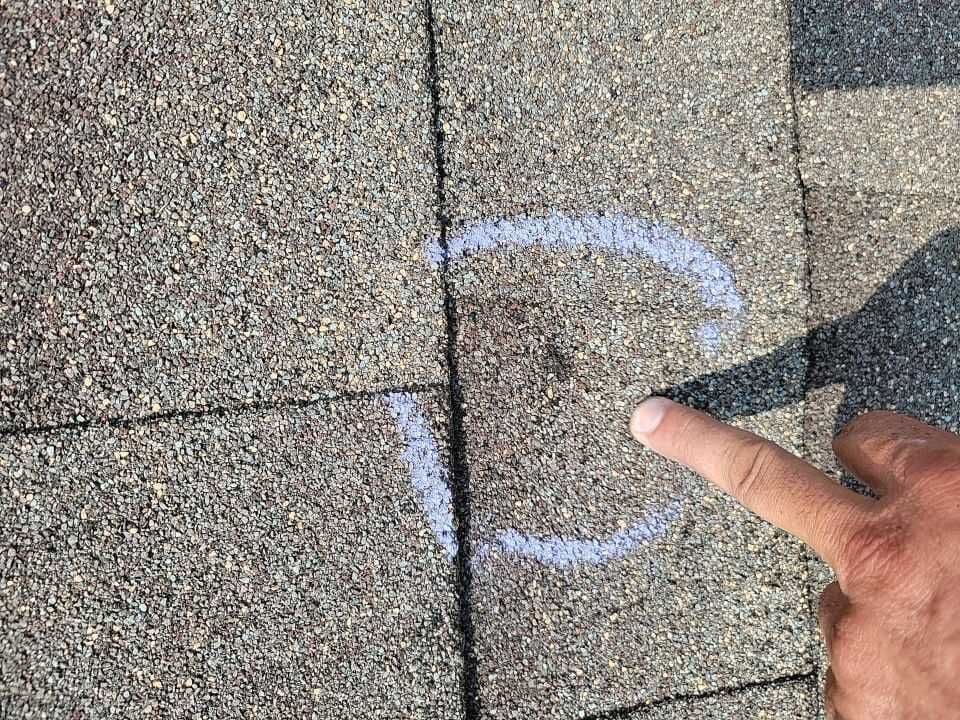
When the adjuster climbs your roof, they don't count every impact across the whole thing. They pick a 10 foot by 10 foot section on each slope — 100 square feet, what the industry calls one "square" of roofing. They chalk the corners, then count the hail strikes inside that boundary. That count decides your claim.
The location matters. A test square pulled from a storm-facing slope gets a different count than one pulled from a sheltered slope. That's why I always ask to walk the roof with the adjuster — to make sure the squares get pulled from representative areas, not just the spots easiest to reach from the ladder. A good adjuster pulls multiple test squares per slope. Some pull one. Homeowners almost never know which one they're getting.
The Threshold Numbers, Carrier by Carrier
Here's roughly what I've seen across Twin Cities claims. None of this is official policy — these are patterns I observe on actual jobs. Your carrier's guideline can shift based on adjuster discretion, shingle type, and policy fine print.
| Carrier patterns I see most | Typical threshold |
|---|---|
| State Farm, American Family, Liberty, Travelers | 8+ hits on 2+ slopes |
| Allstate | 10+ hits on 2+ slopes (stricter) |
| Auto-Owners / Western National | 6-8+, more flexible on older roofs |
| Erie / Encompass / smaller carriers | Varies widely |
The 8-hit threshold is the most common one I run into. Allstate is the outlier on the strict side. Smaller regional carriers tend to be more reasonable on older roofs.
Cosmetic vs. Functional Damage — The Distinction That Kills Claims
This is where homeowners get blindsided. An adjuster isn't counting every mark on your shingle. They're counting functional damage — impacts that compromise the shingle's ability to shed water and reach its intended lifespan.
What counts: a bruise you can feel with your hand (soft, slightly springy, like a dented apple), granule loss down to the black asphalt mat, cracked or split shingles, punctures through the fiberglass mat.
What usually doesn't: faint round marks with no granule displacement, tarry spots that didn't disturb the mat, granule loss from age or foot traffic, mechanical damage from tree limbs. (Age-related shingle failure is excluded across the board — see when homeowners insurance covers roof leaks vs. when it doesn't.)
Don't try to count it yourself from old photos or from the ground. You'll either talk yourself into a claim that won't fly, or talk yourself out of one that would've paid.
Soft Metals — The Evidence That Makes or Breaks the Claim
If your shingles are a gray area, the adjuster's next move is the soft metals around the house. Soft metals don't have granules to hide the impact, so they tell a cleaner story:
- Aluminum gutters and downspouts — round dings on the top of the gutter or back of the downspout
- Roof vents — turtle vents, ridge vents, plumbing boots
- Furnace and bath vent caps — soft aluminum hoods take impacts well
- AC condenser fins — the thin fins on the outdoor unit fold easily
- Aluminum window wraps, fascia trim, mailbox, grill cover
I've had adjusters tell me they walked up undecided on the roof and called for replacement after one look at the AC unit. That kind of corroborating evidence is hard to argue with. Don't pressure-wash or scrub anything before the inspection — that granule trail in the gutter is part of the story.
Per-Slope Replacement vs. Whole-Roof Replacement
Here's a wrinkle most homeowners don't know about until they're inside a claim. Even when a claim is approved, the carrier doesn't always pay for the whole roof — sometimes only the damaged slopes. If your west slope took a beating and your east slope was sheltered, the adjuster might write for two slopes instead of four.
That's where Minnesota's matching law kicks in. Minnesota Statute 65A.10 says that if a partial repair leaves a roof that doesn't reasonably match the rest, the insurer has to address the matching issue. In practice that often pushes a partial claim toward a full replacement — matching a 2025 asphalt shingle to a 2018 production batch isn't realistic. I bring up the matching statute on every partial-claim conversation. Most adjusters know it. Some need a reminder. Either way, it's the homeowner's lever.
Cosmetic-Only Endorsements — Read Your Policy
Some carriers have started attaching cosmetic damage endorsements to homeowner policies — fine print saying cosmetic hail damage to metal roofing or siding won't trigger a claim. If you have a metal roof, stone-coated steel, standing seam, or metal siding, pull your declarations page and look for "cosmetic exclusion." If it's there, you'll fight uphill on aesthetic-only damage. By the time hail damages asphalt, it's almost always functional — so this rarely affects asphalt roofs.
When Does Hail Actually Hit That Threshold?
How big does hail have to be before you're likely to cross the threshold? In my experience walking roofs in the western suburbs:
- Under 1 inch — rarely produces functional damage. Usually a denial.
- 1 to 1.25 inches — borderline. Damages older, brittle roofs.
- 1.25 to 1.75 inches — commonly hits the 8-hit threshold if the storm sat for more than a few minutes.
- Over 1.75 inches — almost always meets the threshold somewhere.
Storm duration, wind direction, roof age, and shingle quality all shift the result. For more, see what size hail will damage a roof.
What I Tell Homeowners Before the Adjuster Shows Up
Don't climb up there. Stay on the ground. I cover this in how to assess storm damage before calling for help — but the short version: hail-damaged shingles are slick with loose granules. People fall. Whatever you can't see from the ground isn't worth a broken back.
Take ground-level photos. Gutters, downspouts, AC unit, grill cover, siding. Time-stamp everything. If hailstones are still on the lawn, photograph them next to a ruler or a coin for scale.
Get a contractor up there before the adjuster. Not a high-pressure storm outfit — a local contractor with a real address and a phone that gets answered. I'll document the roof for free so we know what's there before the carrier shows up.
Don't sign anything from a storm chaser. Out-of-state crews descend on the Twin Cities after big storms. Most are gone by November. Many aren't licensed in Minnesota, won't be around for warranty work, and use AOB (assignment of benefits) forms to take control of your claim. Sign nothing without your contractor walking you through it.
Know your deductible. Minnesota Statute 325E.66 makes it illegal for any contractor to waive, rebate, or absorb your insurance deductible. Anyone offering "no out of pocket" is breaking state law. No legitimate contractor will do it.
When You're a Solid Approval (and When You Aren't)
You're in good shape if: there's a confirmed hail event in your area within the last 12 months, you can see damage on soft metals (gutters, vents, AC fins), the storm produced 1.25+ inch hail per NWS reports, multiple slopes faced the storm, and your roof is asphalt and 8+ years old. If you're inside that window, spec Class 4 on the replacement — a new Class 4 roof lowers your homeowners insurance 10–30 percent on top of restoring full RCV coverage.
You're fighting uphill if: the hail was under an inch with no soft-metal damage, the storm was more than 12 months ago and unfiled, your roof is over 20 years old and the damage looks more like age, or you've got a cosmetic-only endorsement and the damage is aesthetic.
Even on long-shot cases, I'll still do a free inspection. Sometimes I'm wrong — sometimes the damage is worse than the homeowner described on the phone. But I'm not going to tell you a marginal case is a slam dunk to get you to file. Modex never promises a free roof or guaranteed approval. That's the opposite of how we work.
For the rest of the playbook, see how to file a roof insurance claim, ACV vs. RCV on Minnesota roof claims, and the photo guide at what hail damage looks like on a MN roof.
Frequently Asked Questions
How many hail hits per square does insurance require to replace a roof?
Most Minnesota carriers want to see 8 or more hail impacts inside a 10' x 10' test square, on at least 2 of the 4 slopes of your roof. Allstate often requires 10. Some smaller regional carriers will approve on 6 if the roof is older or the damage is severe.
What's a "test square" in a hail inspection?
It's a 10 foot by 10 foot section (100 square feet) of your roof that the adjuster picks as a representative sample. They count the hail strikes inside that boundary. That count becomes the basis for the claim decision. A thorough adjuster pulls multiple test squares per slope.
Will insurance pay for partial roof replacement or only the full thing?
Both happen. Carriers will pay per-slope when only some slopes are damaged. Minnesota's matching law (Statute 65A.10) often pushes partial claims toward full replacement because you can't realistically match a new asphalt shingle to an older production batch. I bring up the matching statute on every partial-claim negotiation.
What's the difference between cosmetic and functional hail damage?
Cosmetic damage is a mark that didn't compromise the shingle's ability to shed water — a smudge, a tarry spot, granule rub-off from wear. Functional damage is a bruise, a crack, a puncture, or granule loss down to the asphalt mat. Insurance pays on functional damage. Some policies exclude cosmetic damage on metal roofs and siding entirely.
How does a contractor "absorb" the deductible legally in Minnesota?
They don't. Minnesota Statute 325E.66 makes it illegal for any contractor to waive, rebate, or pay your insurance deductible. Anyone offering to is breaking state law and putting your claim at risk. Pay your deductible. Period. If a contractor pitches you on "no out of pocket," walk away.
Can I file a claim if my hailstorm was more than a year ago?
Sometimes. Most Minnesota policies require you to file within 12 months of the loss event. Some allow longer. Check your declarations page or call your agent. The older the claim, the harder it gets — but if you have date-stamped photos, NWS storm reports, and visible damage that lines up, you may still have a case. Don't wait.
Get an Honest Inspection Before You File
If you're trying to figure out whether you've got enough damage to file, I'd rather come out and tell you honestly than have you waste a claim on borderline damage that won't pay. Modern Exterior Systems is a CertainTeed ShingleMaster and Malarkey Emerald Pro certified contractor serving Eden Prairie, Minneapolis, and 90+ Twin Cities communities. I'll come to your home, document what's there, and tell you whether it meets the threshold — without pressure and without promises I can't keep.
Call 952-206-6339 or request your free inspection online. For more on what to look for in the meantime, see our hail damage hub and the Minneapolis storm damage repair page.
Modern Exterior Systems is a women-owned, family-operated roofing and exterior contractor based in Eden Prairie, MN, serving the Twin Cities metro. Owner Joe Dvorak brings decades of hands-on construction experience, CertainTeed ShingleMaster and Malarkey Emerald Pro certifications, and a lifetime workmanship warranty to every residential project. an A+ rating with the BBB.