

After the August 11, 2023 storm rolled across the Twin Cities — the one that ended up on NOAA's billion-dollar disaster list at $1.5B — my phone didn't stop ringing for three weeks. The first question almost every homeowner asked: the news said quarter-size hail. Is my roof actually damaged?
Fair question. I've been climbing Twin Cities roofs for decades, and the answer is more nuanced than a single number — but there is a threshold, and quarter-size (1 inch) is the one to know. Here's how it actually works.
The Short Answer
For a standard architectural asphalt shingle roof — what's on probably 85% of homes in the Twin Cities — functional damage starts at quarter-size hail (1 inch diameter). That's the threshold most insurance carriers use, the threshold IBHS (Insurance Institute for Business & Home Safety) research backs up, and the threshold I personally use when I'm deciding whether a customer needs a free inspection or just a coffee.
A few important wrinkles before we get into the size-by-size breakdown:
- 3-tab shingles (older, cheaper) can take damage from hail as small as 1 inch. Architectural shingles need closer to 1.25 inches.
- Wind matters more than people think. Per IBHS, a 0.75-inch hailstone in a 60 mph crosswind can hit with more kinetic energy than a 1-inch stone falling straight down.
- Age matters a lot. A 15-year-old asphalt roof is brittle. The same hailstone that bounces off a 5-year-old roof can crack an old one.
- Class 4 impact-resistant shingles (like DaVinci synthetic slate, or impact-rated CertainTeed/Atlas products) push the damage threshold up to roughly 1.75–2 inches.
Now the part you actually came here for.
The NOAA Hail Size Scale (and What It Means for Your Roof)
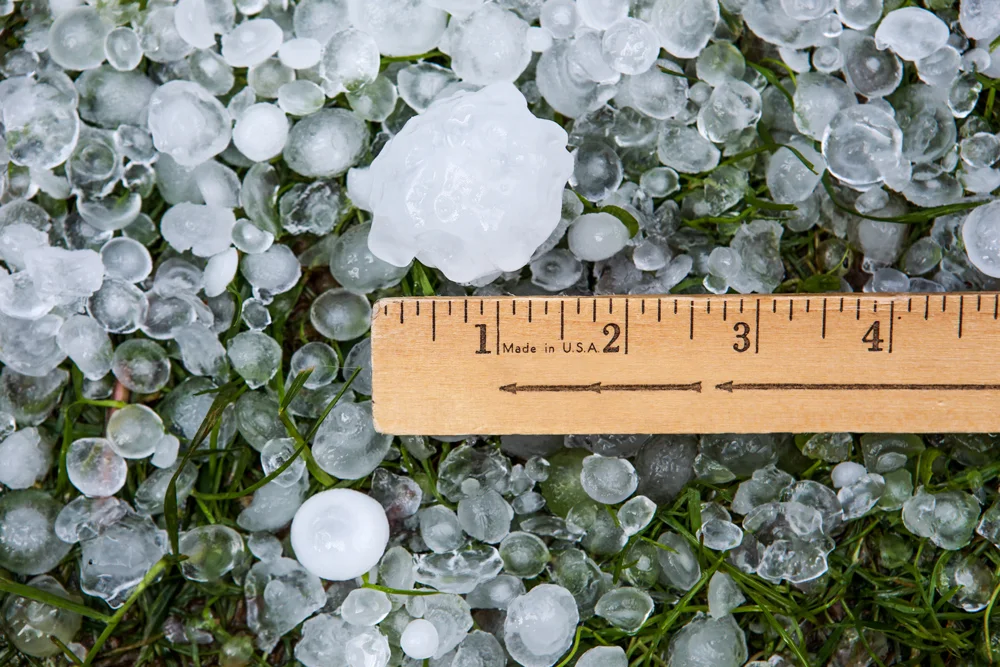
The National Weather Service uses object comparisons to help homeowners report hail size — because nobody's running outside in a hailstorm with calipers. Here's the official scale, paired with what I see on Twin Cities roofs at each size.
| Object | Diameter | What Happens to a Standard Asphalt Roof |
|---|---|---|
| Pea | 1/4" | Nothing. Not a roofing event. |
| Mothball | 1/2" | Cosmetic only. Maybe granule scatter in gutters. |
| Penny | 3/4" | Possible damage on old/brittle roofs. Otherwise fine. |
| Nickel | 7/8" | Borderline. Inspect older roofs. |
| Quarter | 1" | Damage threshold. Functional damage begins here. |
| Half Dollar | 1 1/4" | Widespread bruising, granule loss, cracked shingles. |
| Ping-Pong Ball | 1 1/2" | Real damage on most roofs. File a claim. |
| Golf Ball | 1 3/4" | Significant damage even on newer roofs. Likely full replacement. |
| Tennis Ball | 2 1/2" | Severe. Punctures possible. Total replacement territory. |
| Baseball | 2 3/4" | Catastrophic. Often punches through shingles + decking damage. |
| Softball | 4" | Major structural concern. Get a tarp on it. |
The line that matters most is quarter-size (1 inch). Below that, your roof is almost certainly fine. At or above that, you need eyes on it. Even at quarter-size, the adjuster has a separate count to clear — see how much hail damage it actually takes to replace a roof for the test-square math.
Threshold by Roof Material
Not all roofs are equal. Here's how the threshold shifts depending on what's on your house.
Standard 3-Tab Asphalt Shingles
Damage threshold: ~1 inch (quarter). Thinnest, cheapest asphalt — single-layer mat with granule coating. Mostly on older homes. Quarter-size hail displaces granules and accelerates aging by years even when it doesn't crack the shingle outright.
Architectural (Laminated) Asphalt Shingles
Damage threshold: ~1.25 inches. This is the dominant roof in the Twin Cities. CertainTeed Landmark, Malarkey Vista, Atlas Pinnacle Pristine. The double-layer construction handles smaller hits better, but anything over 1.25 inches leaves marks I can see from a ladder.
Class 4 Impact-Resistant Asphalt Shingles
Damage threshold: ~1.75–2 inches (golf ball). Malarkey Legacy and CertainTeed Landmark IR are common Class 4 picks. They're tested by being struck with a 2-inch steel ball from a measured drop. Most insurance carriers give you a 10–30% premium discount for installing them in Minnesota — full breakdown in does a new roof lower your homeowners insurance.
Metal Roofing (Steel, Standing Seam)
Damage threshold: ~1.5 inches for cosmetic, 2+ inches for functional. Tougher than asphalt, but smaller hail can leave visible dents that don't compromise function. Stone-coated steel hides cosmetic dents better than standing seam.
Synthetic Slate / Shake (DaVinci, CeDUR, Brava)
Damage threshold: ~2+ inches. Polymer-based, impact-rated to Class 4 or better. The DaVinci synthetic slate I install has held up through hail events that destroyed the asphalt roofs across the street.
Cedar Shake (Real Wood)
Damage threshold: ~1.5 inches. Cedar splits more than it dents. Harder to inspect because natural surface variation hides impact marks. Get a real inspection — don't try to eyeball it.
Twin Cities Hail History: What We've Actually Had
I do this work in Minnesota, so let me ground the numbers in real storms.
August 11, 2023 — "Happy Hour Hail." Per the Minnesota DNR Climate Journal, the storm dropped half dollar to golf ball-sized hail across a continuous swath from Willmar to Rochester. Baseball-sized hail north of Buffalo Lake in Renville County. NOAA tagged it a billion-dollar disaster — $1.5B in damage. Almost every architectural-shingle roof in the strike zone needed replacement.
July 31–August 1, 2024. Hail across the southwest metro ranged from quarter to half-dollar. The west-metro suburbs — Eden Prairie, Chanhassen, Minnetonka, Excelsior — caught the brunt of it.
If you've owned a Twin Cities home for more than 5–7 years, your roof has almost certainly been hit by quarter-size-or-larger hail at least once. Whether it caused functional damage depends on the size, the wind, the age of the roof, and what's under those shingles. Full breakdown by year here: Twin Cities hail history 2020–2026.
What to Inspect (From the Ground) After Each Size Band
The layperson rule I tell every homeowner: don't climb your roof. You won't see what I see, and you'll fall off. What you can check, all from ground level:
After pea to nickel-size hail (< 1")
You're probably fine. Nothing to do. Move on with your evening.
After quarter to half-dollar (1" – 1.25")
Look at these from the ground or your yard:
- Gutters and downspouts — dented? Granule sediment piled up below downspout openings?
- AC condenser fins — bent or flattened? AC fins are the canary in the coal mine. If they're bent, your roof took the same hit.
- Window screens — torn, dented, pushed in?
- Painted surfaces — siding, garage doors, mailbox — any chipped paint or impact marks?
- Deck boards or wood fences — fresh light-colored spots where bark or paint got knocked off?
If two or more of those check positive, you've got a real possibility of roof damage. Time to call.
After golf-ball or larger (1.75"+)
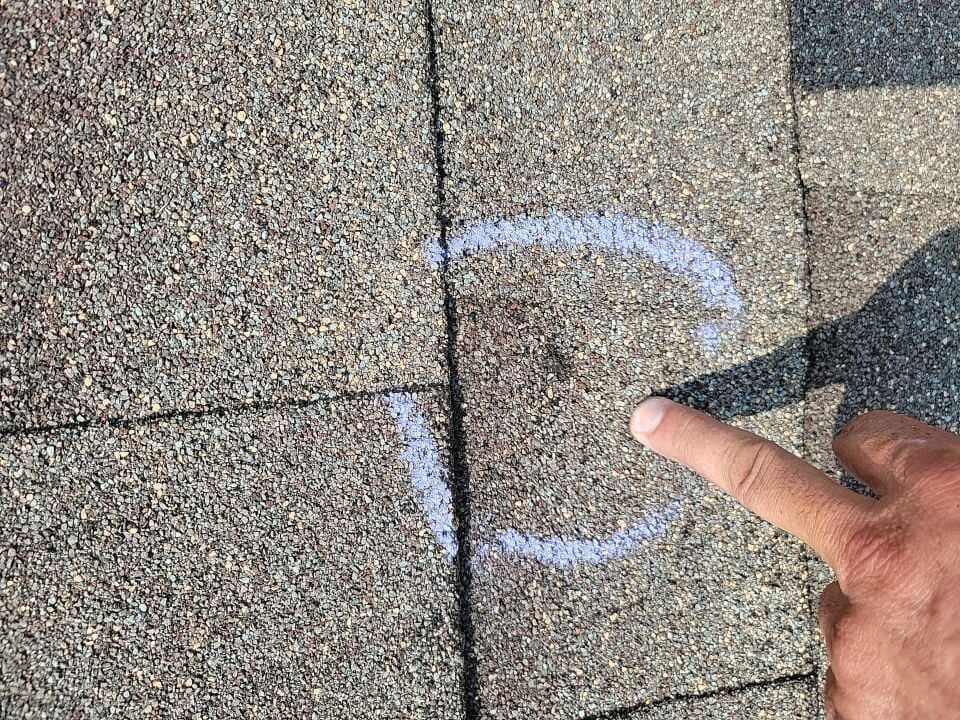
You almost certainly have roof damage. Call for an inspection within 48 hours — the sooner you get a professional eye on it, the cleaner the documentation. Tarps, water intrusion, decking damage — all things you want diagnosed before the next rain. Full post-storm playbook: first 48 hours after a hailstorm — the Twin Cities playbook.
When to Call vs. When to Wait
Call right away if:
- Hail at your address was confirmed at 1" or larger
- You see visible damage to AC fins, gutters, or window screens
- You have shingle pieces or granules in your downspouts
- Your roof is more than 10 years old (any storm + an aging roof = inspect)
- A door-knocker is in your neighborhood pushing free inspections (get your contractor on the roof, not theirs)
Wait and watch if:
- Confirmed hail was nickel-size or smaller
- Your AC fins, gutters, and window screens look untouched
- Your roof is less than 5 years old and the storm wasn't unusually severe
When in doubt, get an inspection. A free measurement from a real contractor takes me about 45 minutes and costs you nothing. Compare that to a missed claim window or a slow leak that doesn't show up until ceiling stains six months later.
A Note on Insurance and the Damage Threshold
The 1-inch threshold isn't a law — it's an industry convention. State Farm, Allstate, American Family, Progressive, and most other carriers operating in Minnesota will write a roof claim if there's confirmed quarter-size-or-larger hail in your area AND a professional inspection documents impact damage. Both pieces need to be there.
A few things I'd add as a Twin Cities contractor who's worked a lot of claims:
- Per Minnesota Statute 325E.66, no contractor can legally waive your deductible. Anyone offering to is breaking state law. Walk away.
- Insurance covers functional damage, not just visible damage. A roof can be totaled by hail that doesn't look bad from the ground.
- Matching law in Minnesota is favorable to homeowners — if a partial repair won't match, carriers generally have to fund a full slope or full replacement.
More on documenting damage: photo guide to what hail damage actually looks like on a Twin Cities roof. And if you're not sure whether to call yet, this is the framework I use to help homeowners decide.
The Bottom Line
Quarter-size (1 inch) hail is the threshold for functional damage on a standard architectural asphalt roof. Smaller hail rarely causes claimable damage. Larger hail almost always does. Wind, roof age, and shingle type can shift the threshold either direction.
If you got hit and you're not sure where you fall on that spectrum, that's literally what I do all summer. The inspection's free, and I'll tell you straight whether you have a roof claim or whether you don't.
Frequently Asked Questions
Can quarter-size hail damage a roof?
Yes. Quarter-size hail (1 inch diameter) is the established threshold where functional damage to standard asphalt shingle roofs begins. Most insurance carriers will write a roof claim when quarter-size-or-larger hail is confirmed in the area AND an inspection documents impact damage. On older roofs or in high-wind conditions, even slightly smaller hail can cause damage.
What's the smallest hail that can damage a roof?
It depends on roof age and condition. On a 15-year-old asphalt roof with brittle shingles, 0.75-inch hail in a high-wind storm can cause crackingbruising. On a 5-year-old roof in calm conditions, the same hail typically does nothing. For a healthy, mid-life asphalt roof, 1 inch is the practical floor.
Does golf-ball-sized hail always total a roof?
Almost always on a standard architectural asphalt roof — yes. Golf-ball hail (1.75 inches) carries enough kinetic energy to crack, bruise, and displace granules across most of a roof's surface in a single storm. Class 4 impact-resistant shingles and synthetic slate hold up better, but for the average Twin Cities home, expect a full replacement after a golf-ball event.
How do I know what size hail hit my house?
Three ways: (1) check the National Weather Service's local storm report archive for your zip code and storm date, (2) look at HailTrace or similar storm-tracking sites that map confirmed hail size by location, or (3) measure any hailstones still on the ground using a ruler or by comparing to coins (penny = 3/4", nickel = 7/8", quarter = 1"). Insurance carriers will use the official NWS or storm-track data when evaluating claims.
Will a Class 4 impact-resistant roof survive Twin Cities hail?
Mostly yes. Class 4 shingles (Malarkey Legacy, CertainTeed Landmark IR, and similar) and synthetic slate like DaVinci are rated to withstand hail up to about 2 inches without functional damage. They're not bulletproof — anything baseball-size or larger will mark them — but they shift the damage threshold from quarter-size to golf-ball-size, which is a huge difference in storm-frequent markets like ours. Most insurance carriers offer a 10–30% premium discount for installing them.
How long do I have to file a hail damage insurance claim in Minnesota?
Most Minnesota carriers require claims be filed within 12 months of the storm date — some policies allow 24. Check yours. Practically: file early. Memory fades, evidence gets covered up, and door-knockers will be in your neighborhood making everyone's roof story confused. Start here: storm damage hub.
Ready to find out if your roof took a hit? Call Modern Exterior Systems at 952-206-6339 for a free hail damage inspection. I'll come out, get on the roof, document what's there with photos, and tell you straight whether you have a claimable storm or not. No pressure. No deductible games (illegal in Minnesota anyway). You can also request your free inspection online.
For more on what we do post-storm: storm damage hub · emergency roof repair in Minneapolis · Twin Cities hail history 2020–2026.
Modern Exterior Systems is a women-owned, family-operated roofing and exterior contractor based in Eden Prairie, MN, serving the Twin Cities metro for decades. Owner Joe Dvorak brings hands-on construction experience, CertainTeed ShingleMaster and Malarkey Emerald Pro certifications, and a LIFETIME workmanship warranty to every project. an A+ rating with the BBB.