

I've been climbing around cedar roofs in the Twin Cities for two decades, and I'll tell you the truth most inspection articles won't: you can catch about 80% of what's wrong with a cedar roof from the ground with a good pair of binoculars. You don't need to get on it. You shouldn't get on it, honestly — walking a cedar roof is how you turn a $400 repair into a $4,000 one.
I'm Joe Dvorak. This is the same walkthrough I'd give you if you called me and said, "Joe, my cedar roof is 18 years old and I want to know if I'm in trouble." Let's go through it the way I actually look at one.
The Short Answer
A cedar shake roof is doing fine if the shakes are laying flat, holding their thickness, and free of heavy moss or rot. It's in trouble when you see widespread curling and cupping, shakes splitting and sliding out of course, black or green growth covering the north slope, or daylight where there shouldn't be any. Most cedar roofs in Minnesota give you 20 to 30 years — but the back half of that life is where small problems turn into leaks fast.
Why Cedar Inspection Is Different in Minnesota
Cedar is a natural product, and our climate is brutal on it. We can swing 50 degrees in 24 hours during March. That freeze-thaw cycle works moisture into every split and check in the wood, then expands it. The north and east slopes — the ones that don't get afternoon sun to dry out — hold moisture the longest, so that's where moss, mold, and rot show up first.
So when I inspect, I'm not looking at the whole roof equally. I'm spending most of my time on the shaded slopes, the valleys, and anywhere a tree is dropping shade and debris. A cedar roof under a big silver maple in Edina ages completely differently than the same roof on an open lot in Plymouth.
What to Look For (From the Ground)
Grab binoculars. Walk the full perimeter of the house. Here's my order.
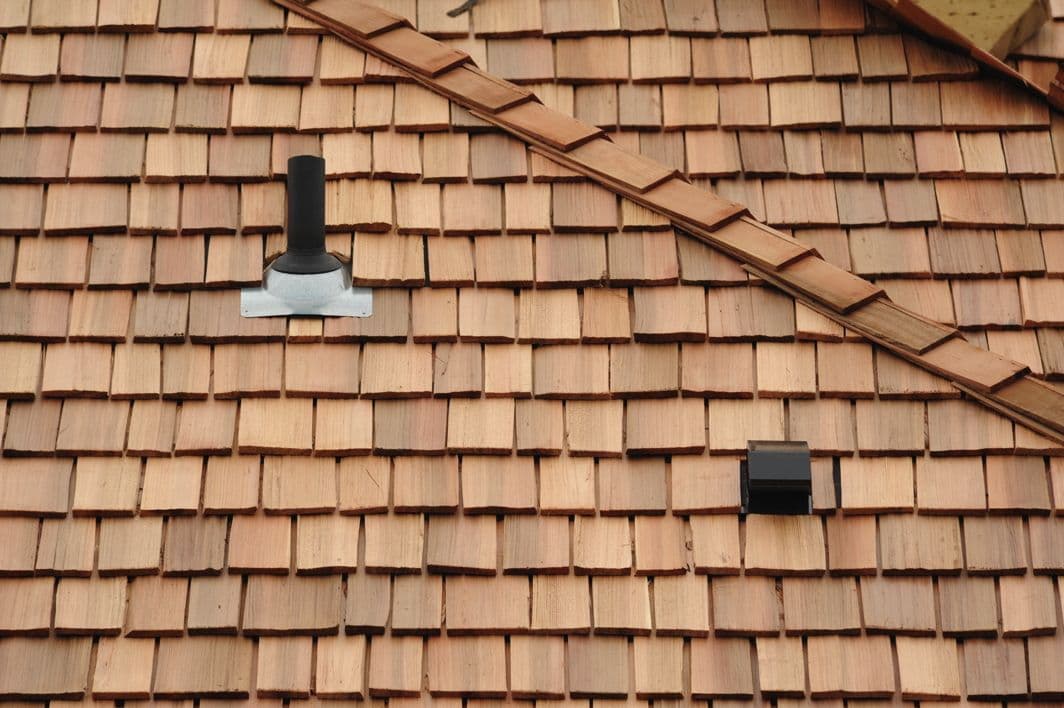
1. Cupping and curling. Healthy shakes lay flat. As cedar dries out and weathers, the edges lift — that's cupping (edges curl up) and curling (the whole shake bows). A little is normal on an older roof. Widespread cupping across a whole slope means the wood has given up its natural oils and is on the back half of its life.
2. Splits and slipped shakes. Cedar splits along the grain — that's normal, even by design to a point. What I'm looking for is splits that line up over the joint below them (that's a leak path straight to the deck) and shakes that have slipped down out of their course, usually because the fastener corroded and let go.
3. Moss, mold, and black staining. Green moss and black "gloeocapsa" staining love a damp north slope. Moss is the bigger problem — it holds water against the wood like a sponge and accelerates rot. A little surface graying is just cedar being cedar. A north slope that's gone solid green is telling you the roof isn't drying out.
4. Missing shakes and exposed felt. Any gap where you can see the underlayment (or worse, the wood deck) is an active vulnerability. One missing shake after a windstorm is a repair. A scattered handful across the roof usually means the fasteners are failing roof-wide.
5. The valleys and flashing. Metal valleys and flashing around chimneys and walls fail before the field of the roof does, on cedar and asphalt alike. Look for rust, lifted metal, or shakes that have crept into the valley channel and are blocking water flow.
6. The ridge. The ridge caps take the most sun and wind. If they're cracked, lifted, or missing, water gets into the most vulnerable seam on the whole roof.
The Warning Signs That Mean "Call Someone"
- Daylight visible through the roof from inside the attic
- Spongy or soft spots you can see flexing in the deck (don't walk on these)
- Active drips or water stains on the ceiling, especially after a thaw
- Moss you can grab a fistful of
- More than a few splits that line up over the joints below
- Granular cedar "mush" washing into the gutters
Any one of those, get a contractor up there. Not because I want to sell you a roof — because cedar hides deck rot, and deck rot is the expensive surprise.
Should You Use a Drone?
A lot of homeowners ask me about this, so here's my honest take: a drone is a genuinely useful tool for getting a close look at the slopes and valleys you can't see from the ground without putting weight on a fragile roof. For a steep cedar roof, or a lake home with hard access, drone photos can show you cupping, splits, and valley problems in detail. I'd rather see a roof from a drone than have a homeowner climb a ladder onto wet cedar. Just know that a drone shows the surface — it doesn't tell you what the deck underneath is doing, and it can't replace a hands-on look when there's a real problem.
Joe's Note
The single best thing you can do for a cedar roof has nothing to do with the roof. It's keeping the trees trimmed back and the roof clear of leaves and needles. Debris traps moisture, moisture grows moss, moss holds water against the wood, and water rots cedar. I've seen 25-year-old cedar roofs on shaded, debris-packed homes that were done at 15, and open, clean ones that were still solid at 30. Same product. Different maintenance.
When It's Repair vs. Replace
If you've got isolated damage — a windblown section, a bad valley, a dozen slipped shakes — that's a repair, and a good cedar roof is worth repairing. When the cupping and splitting are roof-wide, the fasteners are letting go everywhere, and you're finding soft spots in the deck, you're past the point where repairs make sense. That's when I have the conversation about whether you re-roof in cedar again, or move to a synthetic shake that gives you the look without the maintenance and insurance headaches. I wrote about that tradeoff in detail in my honest guide to wood roofs in Minnesota.
Frequently Asked Questions
How often should I inspect a cedar shake roof?
Twice a year is the right rhythm in Minnesota — once in late fall before the snow, once in spring after the thaw. Add a quick look after any major wind or hail event. Cedar problems compound fast once moisture gets in, so catching a slipped shake in spring is a lot cheaper than finding deck rot in the fall.
Can I inspect my cedar roof myself?
You can do most of it from the ground with binoculars, and you should. What you shouldn't do is walk on it — cedar gets slick and brittle, and foot traffic causes splits and breakage even when the roof is otherwise fine. If you need a close look at the upper slopes, that's what a contractor or a drone is for.
How long does a cedar shake roof last in Minnesota?
Most cedar shake roofs here run 20 to 30 years, depending heavily on sun exposure, shade, ventilation, and maintenance. A well-ventilated roof on an open lot that gets cleaned and kept clear of debris lands at the top of that range. A shaded, debris-packed roof can be done in 15.
What does it cost to repair a cedar roof?
A targeted repair — a valley, a windblown section, a run of slipped shakes — typically runs a few hundred to a couple thousand dollars depending on access and how much wood needs replacing. The number jumps if there's deck rot hiding underneath, which is exactly why catching problems early matters.
Is moss on a cedar roof a serious problem?
Yes. Moss isn't just cosmetic — it holds moisture against the wood and accelerates rot, especially on shaded north slopes. Light surface growth can be treated; a slope that's gone solid green usually means the roof isn't drying out and needs a real look.
Should I replace my cedar roof with cedar again?
Some homeowners do, and on the right historic or lake home it's the correct call. Others move to a Class 4 synthetic shake that mimics cedar but skips the maintenance and insurance issues. It comes down to your appetite for upkeep and what your insurance carrier will write. I'll walk you through both honestly.
Get a Real Look From Someone Who's Walked Hundreds of Them
If your cedar roof is making you nervous, I'll come take a look — from the ground, by drone, or up close where it's safe to — and tell you honestly whether you're looking at a repair, a few more good years, or a replacement. Modern Exterior Systems is a CertainTeed ShingleMaster, Malarkey Emerald Pro, and Atlas Pro+ contractor serving Eden Prairie, Minneapolis, and 90+ Twin Cities communities. No high-pressure sales. Call 952-206-6339 or request your free estimate online.
Modern Exterior Systems is a women-owned, family-operated roofing and exterior contractor based in Eden Prairie, MN, serving the Twin Cities metro. Owner Joe Dvorak brings 20+ years of hands-on construction experience, CertainTeed ShingleMaster, Malarkey Emerald Pro, and Atlas Pro+ certifications, and a LIFETIME workmanship warranty to every residential project. an A+ rating with the BBB.