

Joe's note: I've spent 20+ years quoting and installing roofs across the Twin Cities at Modern Exterior Systems (Modex). Every number below comes from real proposals on real metro homes — not a calculator that asks for your ZIP code and guesses.
Updated: 2026-07-13
In 2026, a full roof replacement on a typical Twin Cities home costs $14,000 to $28,000 for quality architectural asphalt shingles — roughly $500 to $900+ per square (100 sq ft) installed. That's the honest range, and everything else on this page explains where your house lands inside it, what pushes it up or down, and how the math changes when insurance or a Class 4 shingle is involved.
The pricing you find online is all over the place because most of it is written by people who've never carried a bundle up a ladder. So here's the straight version.
What does a new asphalt roof cost in the Twin Cities in 2026?
Most asphalt replacements here land between $14,000 and $32,000 installed, depending on the shingle tier. Per square foot of roof — including tear-off, ice-and-water shield, synthetic underlayment, flashing, permits, and cleanup — the 2026 tiers look like this:
| Tier | Cost per sq ft installed | Typical 30-square (3,000 sq ft) roof | Best for |
|---|---|---|---|
| Architectural / dimensional | $5.50–$7.50 | $16,500–$22,500 | Most Twin Cities homes |
| Architectural Class 4 impact-rated | $6.50–$8.50 | $19,500–$25,500 | Hail-prone zips, insurance discount |
| Designer / heavyweight | $8.00–$10.50 | $24,000–$31,500 | Premium curb appeal |
| Luxury / synthetic-look | $10.00–$14.00 | $30,000–$42,000 | Custom homes |
There's no 3-tab row on purpose — I don't quote it. It's a 20-year shingle in a 70-mph-wind market, and a bid that comes in well under this table is usually hiding one.
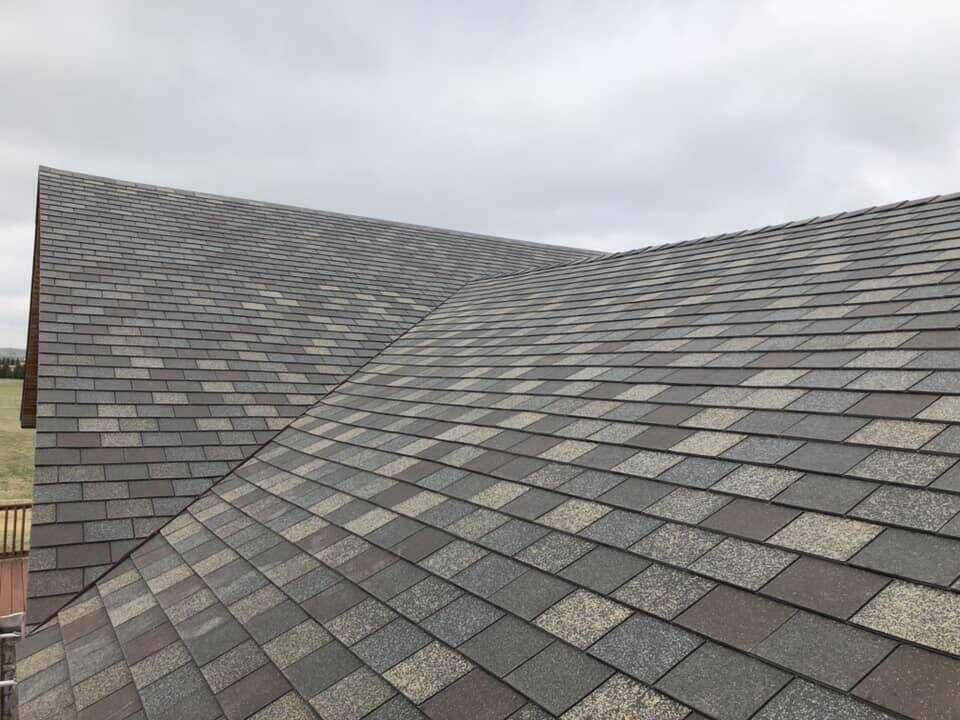
The honest middle of the market is architectural in the $5.50–$7.50 range. That's the shingle on the majority of homes I quote — CertainTeed Landmark, Malarkey Vista AR, Atlas Pinnacle Pristine. If you want the full tier-by-tier reference, the Minnesota asphalt shingle cost guide breaks it down product by product, and my honest ranking of the best shingles for Minnesota weather explains which ones actually survive our freeze-thaw and hail.
How much does a new roof cost by home size?
Cost calculators guess at this. Here's the honest version — and remember your roof's square count depends on pitch and overhangs, not just floor area:
| Home | Typical roof size | Ballpark installed (architectural asphalt) |
|---|---|---|
| Smaller rambler (~1,200 sq ft) | 15–18 squares | $12,000–$16,000 |
| Typical two-story (~2,000 sq ft) | 22–28 squares | $16,000–$25,000 |
| Large or complex home (3,000+ sq ft, cut-up roofline) | 30–45 squares | $25,000–$40,000+ |
These are ballparks to keep you from getting fooled — in either direction. The only real number comes from measuring your actual roof.
Three real projects from my May 2026 proposal stack, all within 15 miles of each other:
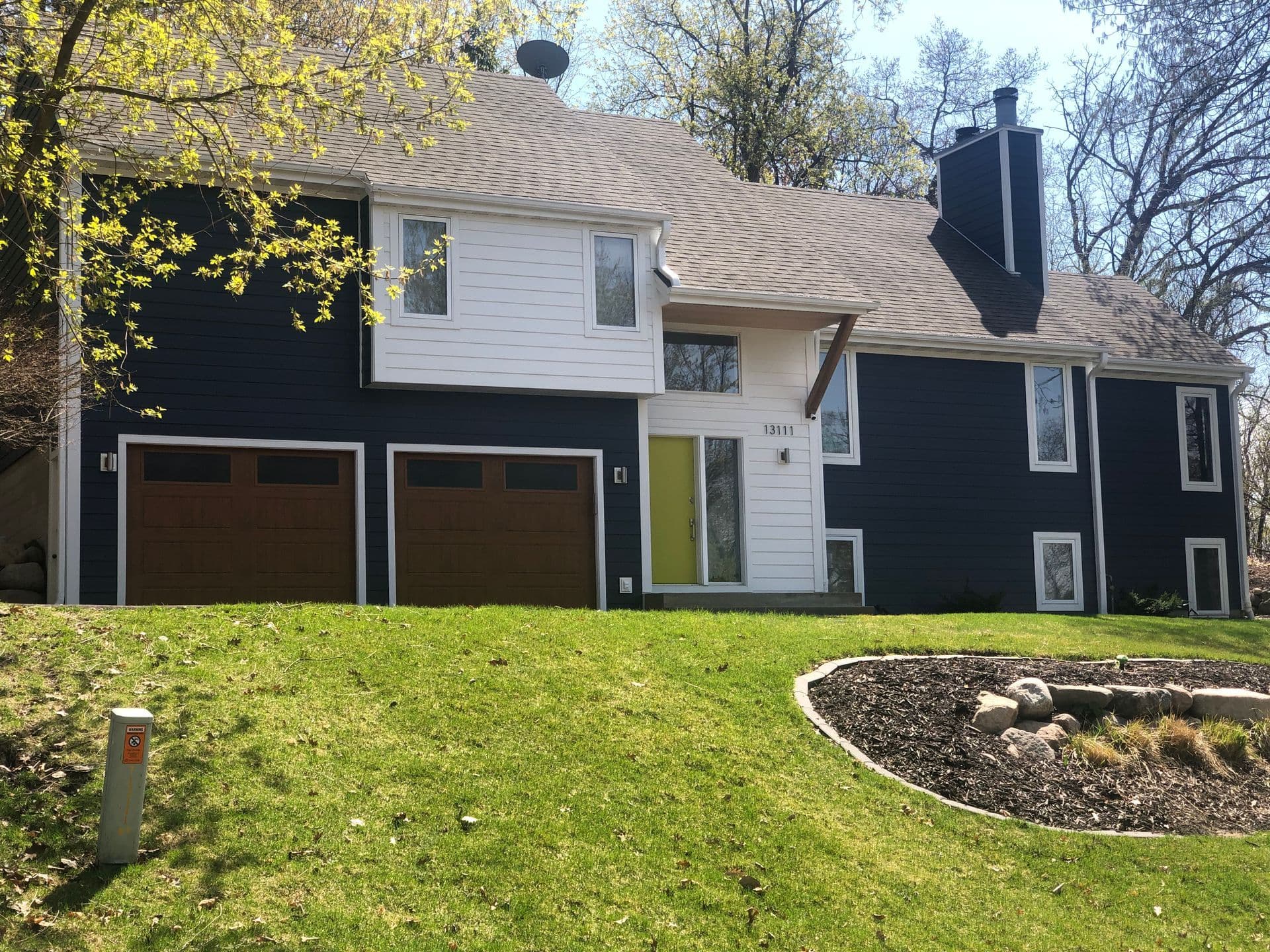
- Eden Prairie two-story walkout. 32 squares, 7/12 pitch, single-layer tear-off, CertainTeed Landmark, no decking surprises. $19,200–$22,400.
- Edina Country Club home. 45 squares, 10/12 and 12/12 pitches, Malarkey Vista AR (Class 4), one chimney flashing rebuild. $34,500–$39,200.
- Bloomington split-level. 22 squares, double-layer tear-off, six sheets of decking replaced mid-project. $14,840–$18,000 final.
Same metro. Same month. Three very different numbers. The variables matter.
What makes a Minneapolis roof cost more or less?
Six things move the number, and anyone quoting you without asking about them is throwing a dart:
- Size and pitch. Roofers price by the square. A 4/12 you can walk; a 12/12 needs harnesses, scaffolding, and a slower pace — steep-pitch labor runs 30 to 50 percent more per square. Those dramatic Edina and Wayzata rooflines are beautiful and they're not cheap.
- Tear-off layers. Minnesota code doesn't let us stack new asphalt over old, so full tear-off is standard. Two old layers means double the tear-off labor and disposal. I check by lifting an edge shingle during the inspection.
- Decking condition. Homes 40+ years old hide soft spots until tear-off day. I flag the per-sheet replacement number up front so nobody gets a surprise $3,000 bill mid-project.
- Complexity. Valleys, dormers, chimneys, skylights — every penetration adds 1 to 3 hours of flashing labor. I've quoted two houses on the same block where one cost 20 percent more purely because of geometry. That's true on Minneapolis's older housing stock especially, where tight lots and steep older rooflines add setup time — our Minneapolis roofing page covers how we work in the city proper.
- Product tier. Basic architectural to Class 4 to designer is a real price ladder, covered above.
- The details that should never be cut. Ice-and-water shield at the eaves (code here, because of ice dams), synthetic underlayment, new flashing, real ventilation. A bid thousands below everyone else is almost always missing one of these.
How much does a Class 4 impact-resistant roof cost — and what does it save on insurance?
A Class 4 impact-rated asphalt roof runs about $1,000–$2,500 more than standard architectural on a typical Twin Cities roof — call it $19,500–$25,500 installed on an average home. In exchange you get the highest impact rating a shingle can earn (UL 2218: a 2-inch steel ball dropped from 20 feet, twice on the same spot, without cracking the mat) and, with most Minnesota insurers, a premium discount — commonly 10 to 30 percent off the wind/hail portion of your policy, which often works out to a few hundred dollars a year.
Run that discount over a 20-plus-year roof life and it frequently pays back the entire upgrade. In a metro that gets hammered by hail as often as ours, Class 4 is one of the few roofing upgrades that can genuinely pay for itself. After the June 2023 hailstorms, I went back and checked Class 4 roofs I'd installed in the prior three years — most were undamaged while standard architecturals next door were totaled. I put a Class 4 on my own house. Did, actually.
Two honest caveats. It's not hail-proof — a severe enough storm can mark any roof, so don't let anyone sell it as a force field. And the discount isn't universal — most Minnesota carriers offer it, but the amount varies and a few don't, so call your agent and ask "what do you offer for a UL Class 4 roof?" before you count on a number. After the install we hand you the manufacturer's UL 2218 certificate so you can file for the discount. The full breakdown — which lines I install and the payback math — is in my Class 4 impact-resistant shingles guide.
Cedar, metal, DaVinci: what do premium roofs run?
Premium materials are a different budget conversation entirely:
| Material | Typical installed cost | Expected lifespan | The honest tradeoff |
|---|---|---|---|
| Standing seam metal | $35,000–$70,000+ | 40–60 years | Longevity and snow-shedding; big upfront number |
| Synthetic slate/shake (DaVinci) | $40,000–$90,000+ | 50+ years | Premium look, impact-rated; luxury pricing |
| Cedar shake | $35,000–$70,000+ | 20–30 years with upkeep | Classic lake-home look; the highest-maintenance roof you can buy |
If you're pricing a specific shingle brand rather than a category, my Malarkey roof cost breakdown walks through their whole lineup line by line — Vista AR to Windsor — and the statewide picture is in the Minnesota roof replacement cost guide.
Does insurance cover any of this?
If your roof was damaged by hail or wind and your claim is approved, your out-of-pocket is usually your deductible plus any upgrades you choose — not the full sticker price. But the process matters, and I want to be straight about how it actually works: you file the claim with your own insurer, and you pay your own deductible. Nobody can legally waive or absorb a deductible in Minnesota — a contractor who offers to is describing insurance fraud and inviting you to join.
What a good contractor does is everything on the roof side: document the damage the way an adjuster needs to see it, meet the adjuster up there with you so the scope is complete, and handle supplements when the first estimate misses real line items — flashing, code-required upgrades, vents. Missed scope is money out of your pocket, and adjuster meetings are where claims get won or lost. Also worth knowing: your first check is usually the depreciated value (ACV), with the held-back depreciation released after the work is invoiced — the ACV vs. RCV explainer covers why that first check isn't the whole job.
Age and wear-and-tear aren't covered. Insurance is for sudden storm damage, not a tired 25-year-old roof. If you think a storm hit your house, start with the hail damage and insurance claims guide — it walks through the whole thing the way I'd tell a neighbor.
Paying cash instead? Most projects can be financed — HELOC, personal loan, or lender programs — and the roof financing options guide compares the real rates.
Why is the cheapest roofing bid usually the most expensive?
Because cheap quotes don't get cheap by magic. I've walked plenty of roofs replaced three years ago by the lowest bidder that are already leaking. The number gets low by cutting what you can't see from the driveway: felt instead of synthetic underlayment, skipped ice-and-water shield, reused chimney flashing (the #1 leak source on Minnesota roofs), no permits, no manufacturer-certified install — which quietly kills your extended warranty — and sometimes no workers' comp, which is the one that can land on your homeowner's policy if someone falls.
Material is only 25 to 35 percent of an installed roof. If a bid is barely above raw material cost, the math doesn't work. Period. Get two or three real bids, make every one specify the same scope line by line, and if one is $5,000 under the others, ask which line they cut. Make them tell you. Get it in writing.
FAQ
How much does it cost to replace a roof in the Twin Cities in 2026?
A quality architectural asphalt replacement runs roughly $14,000–$28,000 on a typical Twin Cities home, or about $500–$900+ per square installed. Premium materials — Class 4 impact-rated, standing seam metal, synthetic slate, cedar — run from the low $20,000s to $90,000+. Size, pitch, tear-off layers, decking condition, and roof complexity move the number.
How much more do Class 4 impact-resistant shingles cost in Minnesota?
Figure roughly $1,000–$2,500 over a standard architectural roof on a typical Twin Cities home. Most Minnesota insurers then discount the wind/hail portion of your premium — commonly 10–30% — which often pays back the upgrade over the roof's life. Confirm the exact discount with your carrier before counting on it.
Does homeowners insurance pay for a new roof in Minnesota?
If the roof has storm damage from hail or wind and the claim is approved, insurance typically covers replacement and your out-of-pocket is your deductible plus any upgrades you choose. You file the claim with your own insurer and pay your own deductible — no contractor can legally waive it in Minnesota. Age and normal wear are not covered.
What does a roof replacement cost per square in the Twin Cities?
Architectural asphalt commonly runs $500–$900+ per square (100 sq ft) installed here, depending on pitch, tear-off, and complexity — with standard architectural centering around $550–$750 per square. Premium and impact-rated lines run above that. Per-square pricing only means something after someone has measured your actual roof.
Why are roof quotes for the same house so different?
Usually because they're not quoting the same scope. Low bids commonly skip ice-and-water shield, use felt instead of synthetic underlayment, reuse old flashing, or leave out permits and certified installation. Make every bid itemize the same materials and details so you're comparing apples to apples — the cheapest number is frequently the most expensive roof over time.
How long does a roof replacement take?
Most Twin Cities asphalt roofs are a one-to-three-day job, weather permitting; larger, steeper, or premium-material roofs take longer. We tear off only what we can close the same day, protect landscaping and gutters, and finish with a full magnetic nail sweep. A full roof replacement also includes new flashing, underlayment, and ice-and-water shield — not just the shingles you see.
Want a real number for your roof instead of an online guess? Call Modern Exterior Systems at 952-206-6339 or get an instant roof estimate in about 60 seconds. Free on-roof measurement, line-by-line written quote, honest answer on repair vs. replacement. No pressure. No same-day close.
Modern Exterior Systems is a women-owned, family-operated roofing and exterior contractor based in Eden Prairie, MN, serving the Twin Cities metro. Owner Joe Dvorak brings 20+ years of hands-on construction experience, CertainTeed ShingleMaster, Malarkey Emerald Pro, and Atlas Pro+ certifications, and a LIFETIME workmanship warranty to every residential project. an A+ rating with the BBB.